Shop Stools Buying Guide
A shop stool should make bench work, detailing, brake service, assembly, and other seated garage jobs easier without becoming another obstacle. The useful choice is not automatically the tallest seat, the thickest cushion, or the model with the largest number printed on its capacity label. It is the stool whose height, base, wheels, and support features fit both the task and the floor beneath it.
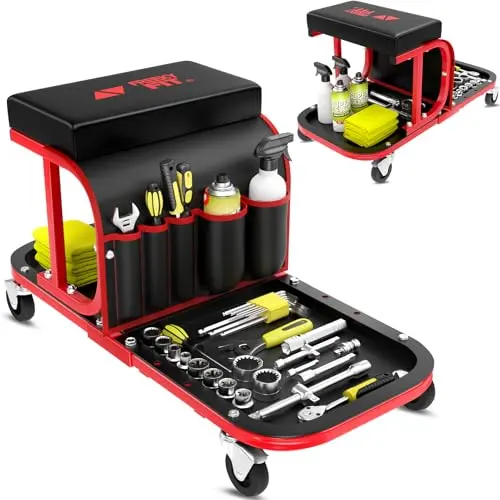
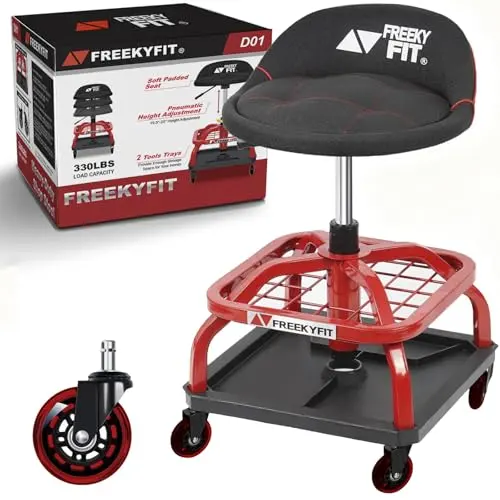
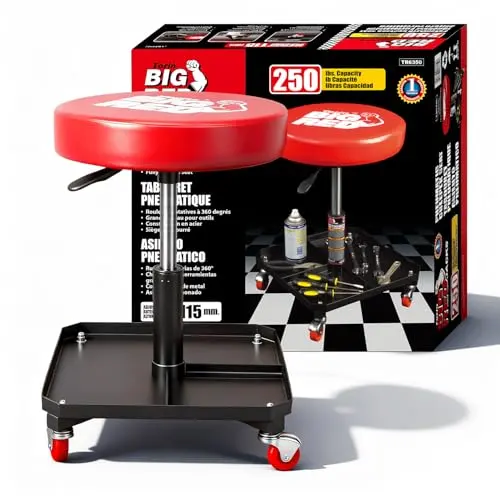
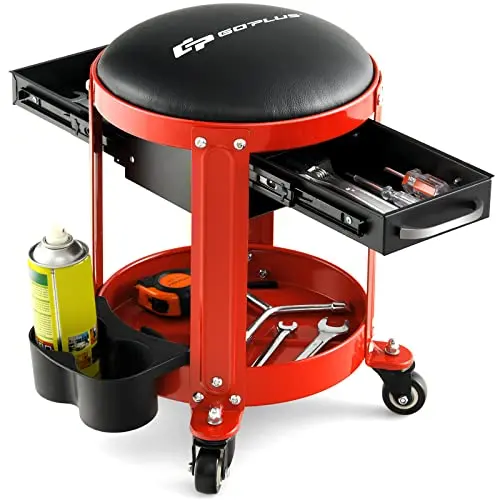
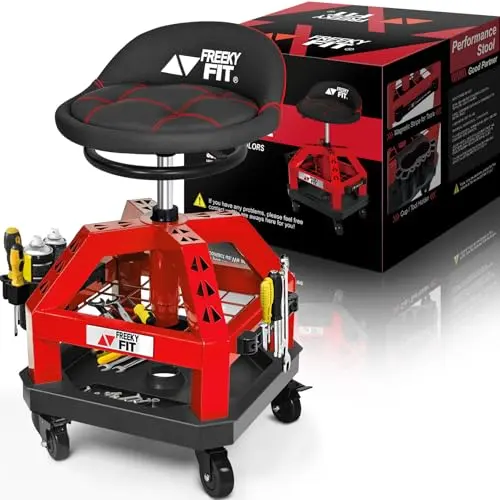
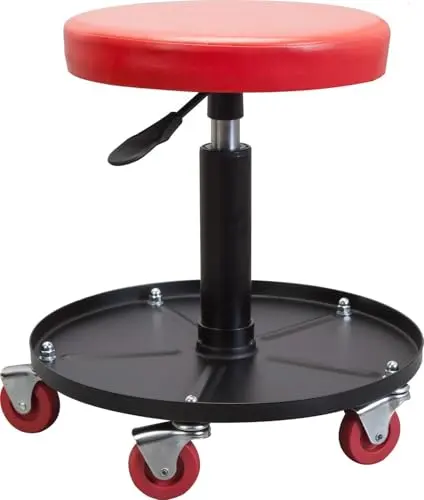
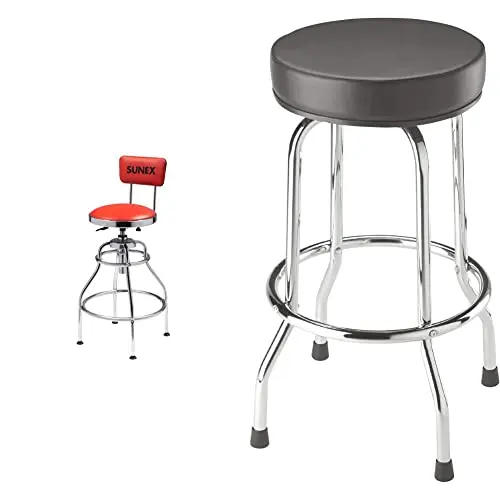
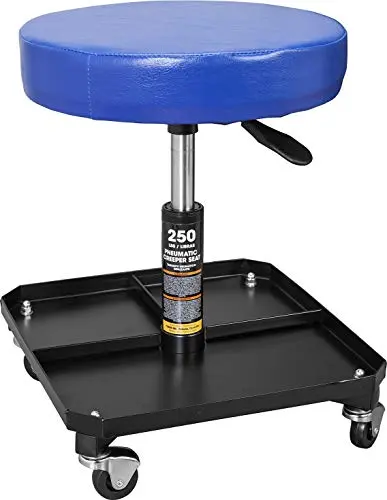
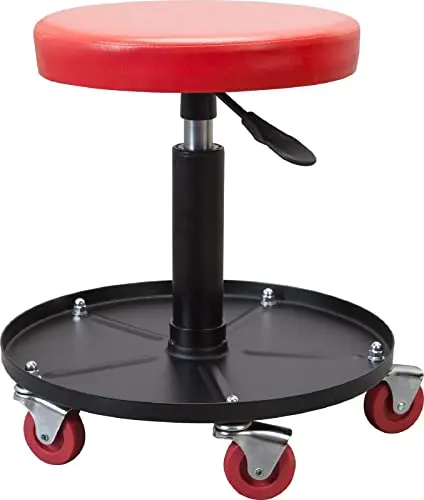
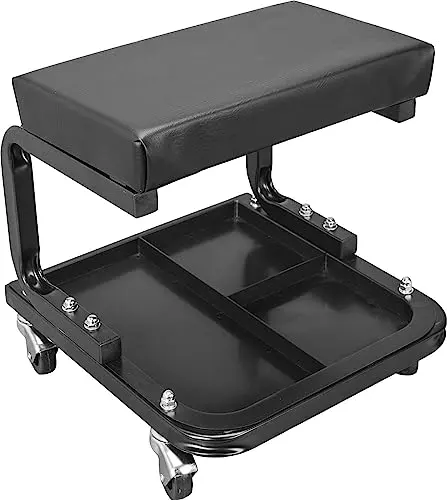
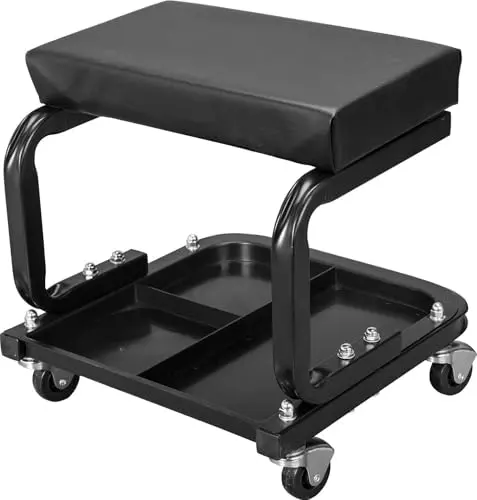
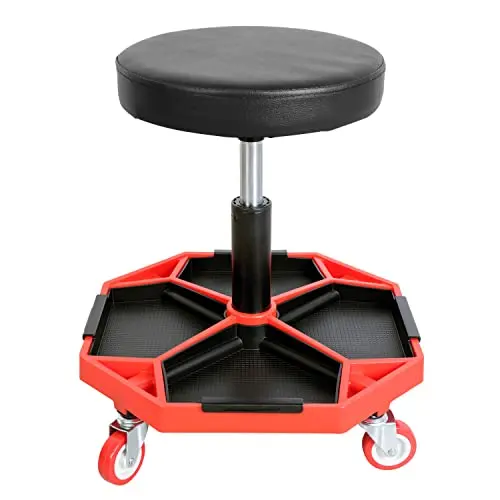
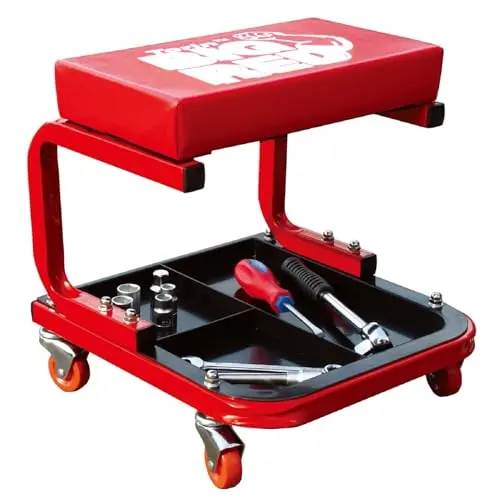
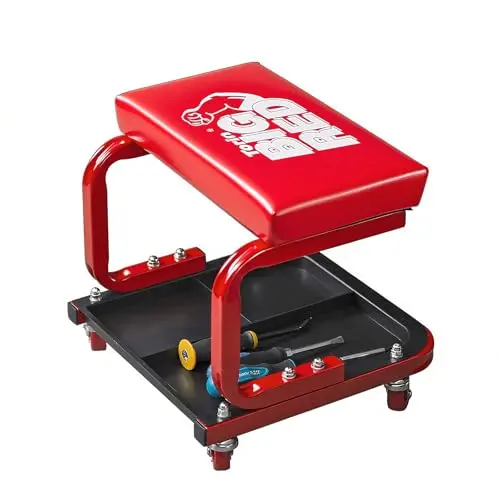
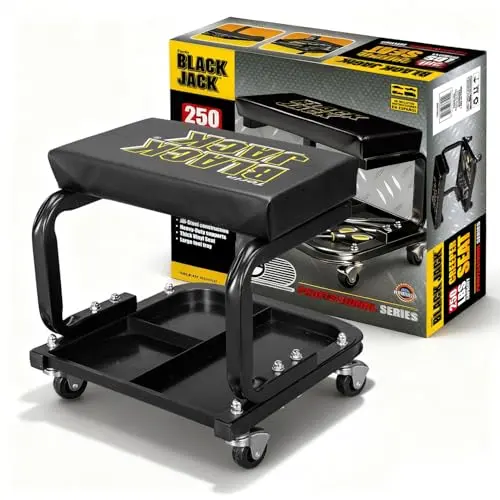
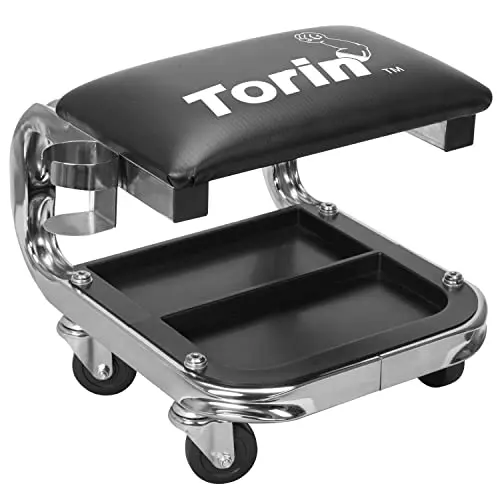
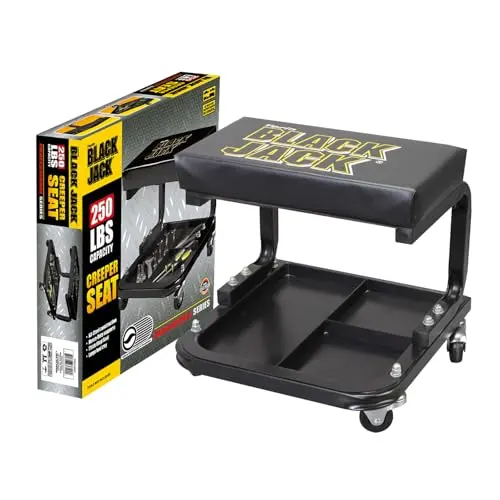
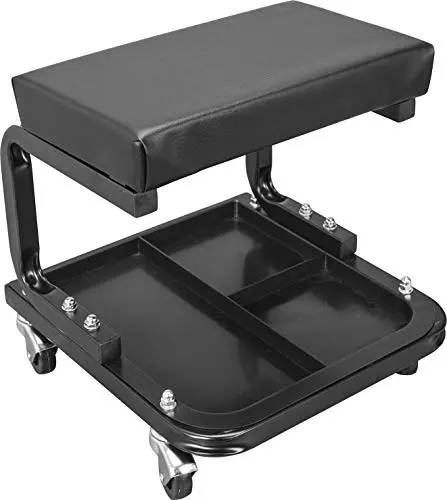
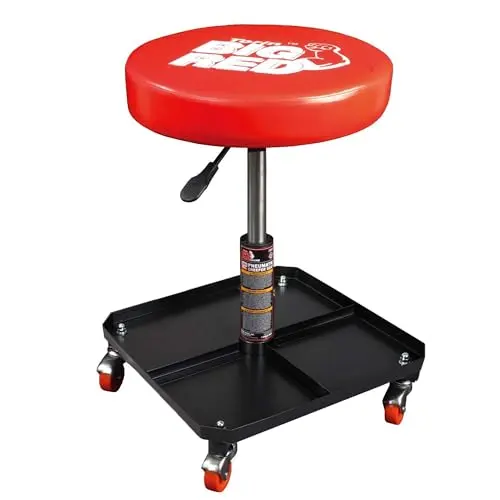
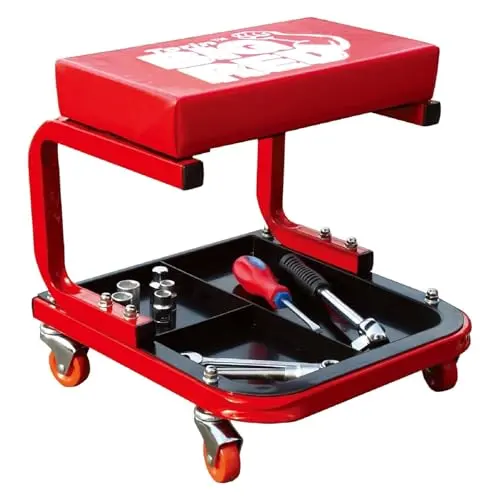
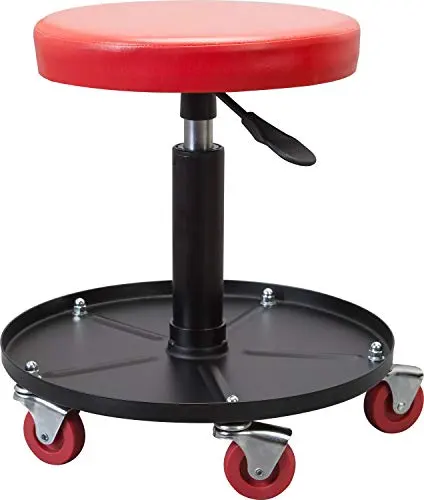
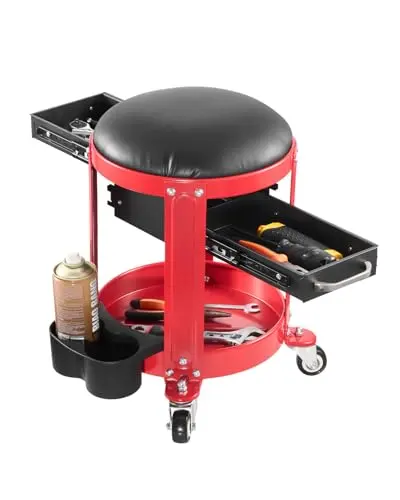
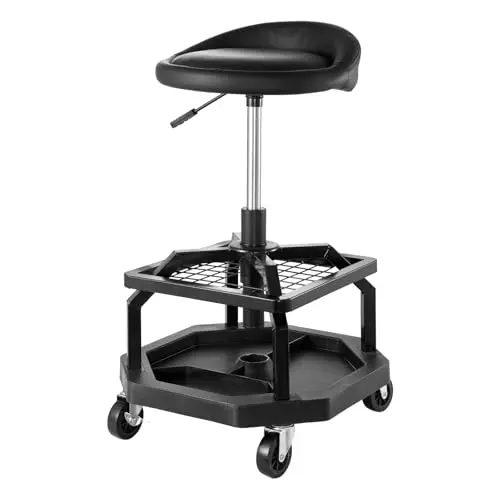
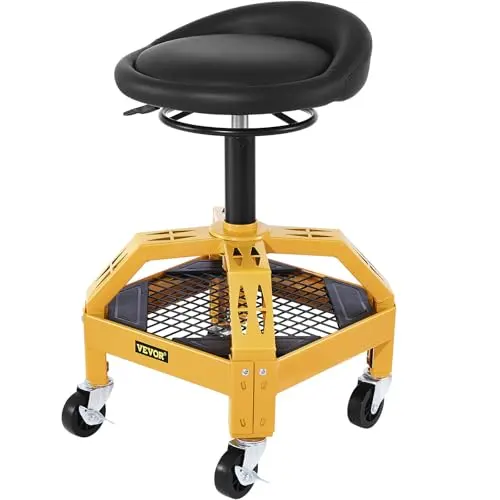
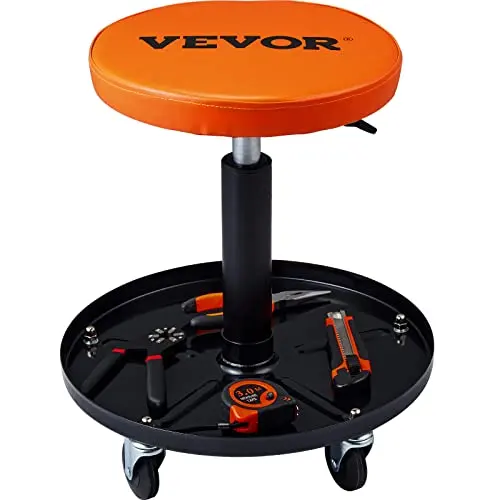
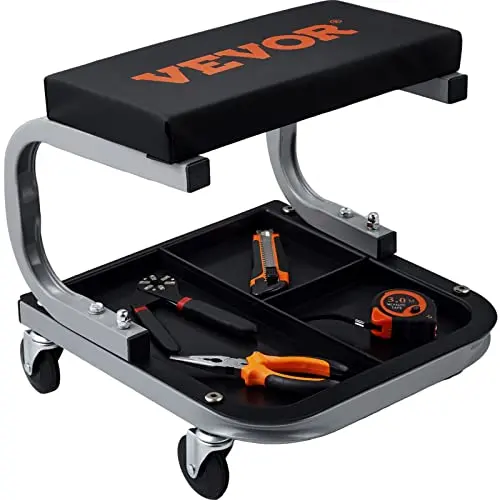
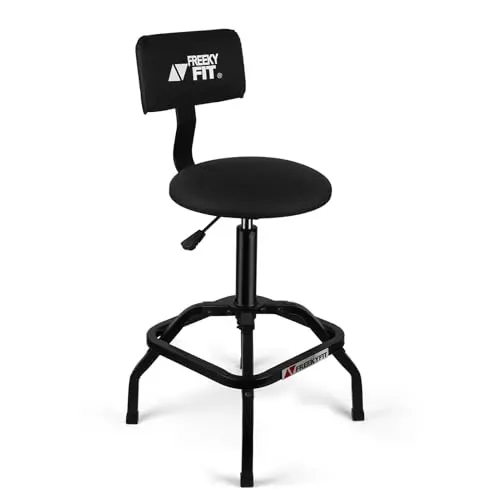
This collection includes low rolling mechanic seats, adjustable stools for workbenches, compact backless models, and stools with backrests or tool trays. Use the guide below to narrow the field, then compare current shop stools on Amazon.
Start With the Work, Not the Stool
List the seated jobs that happen most often. Brake and wheel work usually calls for a low seat that keeps the torso near the hub. Parts cleaning and assembly at a bench need a higher seat that lets the forearms approach the work surface without raised shoulders. Detailing may favor mobility, while precision work may favor a stationary base. A stool that is excellent beside a vehicle can be frustrating at a tall bench, and the reverse is equally true.
Measure the height of the work rather than relying on labels such as “mechanic” or “workshop.” Sit on a household chair temporarily, stack firm material only for measurement, and note where your elbows, knees, and feet naturally settle. That simple exercise reveals whether you need a low creeper seat, a standard shop stool, or a taller adjustable design.
Match Seat Height to the Task
Seat height controls more than comfort. Too low, and the knees may sit sharply above the hips while the upper body reaches upward. Too high, and the feet may dangle or the user may lean down toward the work. For a bench, aim for a position that lets the shoulders stay relaxed and the elbows work close to the body. For wheel service, make sure the seat is low enough to face the hub without bending the neck for the entire job.
An adjustable stool can serve several stations, but check the entire stated range. The minimum height matters for vehicle-side work; the maximum matters at the bench. A broad range is only useful if the base remains stable and the foot support remains usable at both ends. See how to choose an adjustable shop stool for a workbench for a focused measurement process.
Rolling, Stationary, or Locking?
Rolling stools save repeated standing when moving around a wheel, along a cabinet run, or between adjacent tools. Stationary stools provide a predictable platform for tasks that involve hand pressure, controlled leverage, or a fixed bench position. Locking casters create a middle ground, but only when the locks are easy to reach and stop both the wheel and swivel where the design promises it.
Do not judge a rolling base by wheel count alone. Wheel diameter, tread material, bearing quality, and the width of the base affect how it crosses expansion joints, floor-tile seams, and small debris. Read our rolling versus stationary shop stool comparison, and consider how the stool will behave on garage floor mats or garage floor tiles.
Check the Floor and Travel Path
Small hard casters work best on smooth, clean concrete. They can stop abruptly at cords, fasteners, cracked joints, thick mat edges, and coarse interlocking tile transitions. A sudden stop matters because the seated user’s momentum continues even when the wheel does not. Sweep the intended route, mark raised edges, and decide whether mobility is genuinely useful across that surface.
Also measure the full base, not just the seat. A compact cushion can sit above a wide star base or tray. Confirm that the base clears tires, jack stands, cabinet toe kicks, and bench legs. The stool should approach the work without forcing the user to reach beyond the wheel footprint.
Understand Weight Capacity Correctly
The stated weight capacity is a limit for the complete, correctly assembled stool under the manufacturer’s defined conditions. It is not a guarantee that every part tolerates impact, side loading, or a damaged floor. Include the user, clothing, and anything likely to rest on the seat. Do not assume a tool tray increases the seating capacity; tray and drawer limits are separate when the manufacturer supplies them.
Capacity also does not describe stability. A strong seat on a narrow or tall base can still feel less secure during reaching. Compare the base footprint, seat height, caster attachment, frame construction, and instructions together. Our guide to shop stool weight capacity explains how the seat, lift mechanism, frame, and casters share the load.
Backrest or Backless?
A backrest can support longer seated periods when its height and angle meet the user in a neutral position. It may be especially welcome at a fixed bench or during detail work that does not require frequent turning. A backless stool is easier to approach from any direction, often tucks farther under a bench, and encourages quick position changes around a vehicle.
Neither design corrects a poor working height. A backrest can become a leaning point that moves the user away from the work, while a backless stool can invite slumping during long tasks. Compare the tradeoffs in shop stools with backrests versus backless stools.
Seat Shape, Padding, and Foot Support
Thick padding is not always better. Very soft foam can compress unevenly, make position changes harder, and reduce the feeling of the seat edge. A moderately firm cushion often supports longer tasks without trapping the user. Molded seats are easier to wipe clean and may suit oily or dusty work, while upholstered seats need more attention around sharp parts and chemicals.
At bench height, a foot ring or stable foot support can reduce the tendency to hook feet around casters or leave the legs unsupported. Check that the ring is usable at the intended seat height and does not interfere with approaching the bench. A waterfall-style front edge or rounded seat lip may also reduce pressure behind the thighs.
Tool Trays, Drawers, and Storage
Under-seat trays keep sockets, brushes, and small hand tools close during vehicle-side work. They also add width and can collect loose hardware that shifts while the stool rolls. Confirm tray clearance, edge height, cleaning access, and whether stored items can contact the casters. Heavy tools should not be piled on one side where they could change balance.
If the garage already has strong garage tool storage, a simple stool may move more freely than a storage-heavy model. For fasteners and fittings, pair the workstation with small parts organizers rather than treating the stool tray as permanent storage.
Low-Profile Seats for Brake and Wheel Work
For work around wheels, compare seat height with the wheel hub, brake assembly, and lower body panels. The stool must fit between the vehicle, tools, and nearby jack equipment without contacting anything supporting the vehicle. It should never substitute for an approved support device, and the user should not pull or push against the vehicle in a way that rolls the seat unexpectedly.
Look for a stable footprint, unobstructed foot placement, controlled rolling, and a tray that does not block the ankles. Our guide to low-profile mechanic stools for brake and wheel work walks through those specific decisions.
Plan the Complete Workstation
Seating works best as part of a planned station. Place frequently used tools within a comfortable reach zone, keep the main aisle open, and aim garage lighting at the work rather than behind the user. Wall and drawer storage should reduce repeated twisting. The stool needs a parking place where it will not roll into a vehicle path when not in use.
Use garage organization to plan the larger layout, and browse garage products or garage equipment and car care when coordinating the stool with the rest of the shop.
Inspect Before Use
- Confirm every fastener is installed and tightened as the instructions specify.
- Check casters for debris, flat spots, cracks, looseness, and free rotation.
- Inspect welds, frame tubes, seat mounts, and tray connections for damage.
- Test pneumatic or threaded adjustment before sitting fully.
- Verify that caster locks engage and release predictably when equipped.
- Remove damaged stools from use rather than improvising a structural repair.
A shop stool is seating, not a ladder, step, jack, creeper, or vehicle support. Keep all feet or casters on a firm, level surface and avoid leaning far enough that body weight moves beyond the base.
Shop Stool Checklist
- Measure the work height and bench height.
- Choose a seat-height range that supports the real task.
- Measure the full base and storage tray.
- Inspect the floor path for seams, mats, cords, and debris.
- Verify the rated capacity for the complete user load.
- Choose rolling, stationary, or locking mobility deliberately.
- Decide whether a backrest improves the specific job.
- Confirm foot support at taller settings.
- Plan a safe parking and storage location.
Frequently Asked Questions
What height should a shop stool be?
The right height depends on the work. For bench tasks, choose a height that keeps the shoulders relaxed and elbows near the working surface. For wheel and brake work, use a lower seat that faces the hub without sustained neck bending. Measure both the work and the intended stool range.
Are rolling mechanic stools safe on garage floor tiles?
They can be, but small casters may catch on pronounced seams, edge ramps, or debris. Check the tile surface and transitions, keep the route clean, and test rolling behavior slowly before normal use.
Is a stool with a higher weight rating always better?
No. Capacity is essential, but it does not replace suitable height, a stable footprint, good casters, or a usable seat. Choose adequate verified capacity and then compare the features that affect the actual task.
Should a workbench stool have a backrest?
A backrest can help during longer, relatively stationary tasks when it fits the user and bench. Backless stools offer easier rotation, faster entry, and more under-bench clearance. The job pattern should decide.
Can a shop stool be used as a step stool?
No. A rolling or stationary shop stool is not designed as a climbing device. Use a purpose-built step stool or ladder rated for that use.
Final Verdict
The best shop stool is the one that puts the user at the right height, remains stable on the actual garage floor, and moves only when movement helps the task. Measure the bench, vehicle work zone, base clearance, and user load before comparing padding or accessories. Then choose the simplest design that provides the needed support, mobility, and durability.
Build a More Comfortable Work Zone
Match stool height and mobility with lighting, airflow, heating, and floor conditions in the Workshop Comfort & Climate hub.
Fit the Stool to the Whole Station
Use the Workshop Ergonomics Guide to coordinate seat height, foot support, mobility, bench approach, floor mats, lighting, power, storage reach, and position changes.