Garage Floor Tiles Buying Guide
Garage floor tiles can turn unfinished concrete into a cleaner, more deliberate work and parking surface without the curing time associated with many coatings. The right system depends on the slab, vehicle loads, climate, moisture, door clearance, and how the garage is used. A tile suited to a light home-gym corner is not automatically appropriate beneath vehicle tires, rolling tool cabinets, jacks, or heavy workshop equipment.
Choose a Tile System for the Actual Garage Use
Begin by mapping the floor into parking, walking, storage, and work zones. A full-floor installation creates a unified appearance, while a partial installation can define a workbench, motorcycle, garden-tool, or equipment area. Check whether the manufacturer approves the tile for vehicle traffic and the specific environment. Product descriptions that mention “garage” are useful starting points, but published load, temperature, chemical, drainage, and installation guidance should make the final decision.
For parking areas, consider the combined effects of vehicle weight, tire contact, steering, heat, grit, road salt, and fluids. For work zones, think about rolling casters, dropped tools, standing comfort, and whether small hardware could fall through an open pattern. Storage areas may prioritize a level surface and easy cleaning, while wash or snow zones may benefit from ventilation or drainage.
Polypropylene, PVC, and Flexible Tile Differences
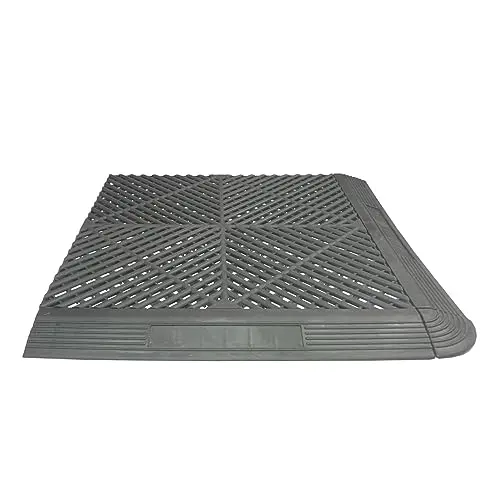
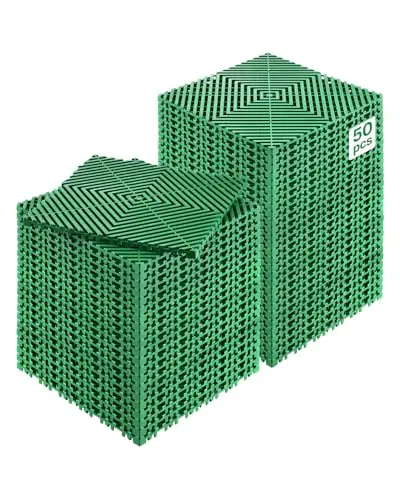
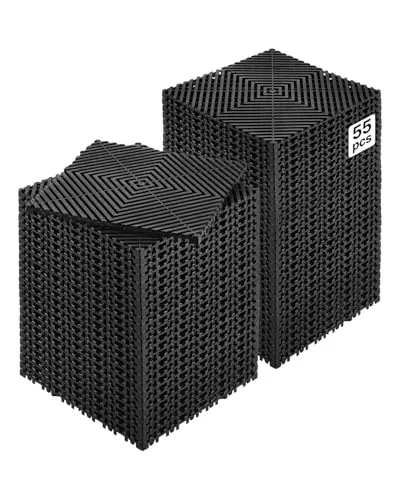
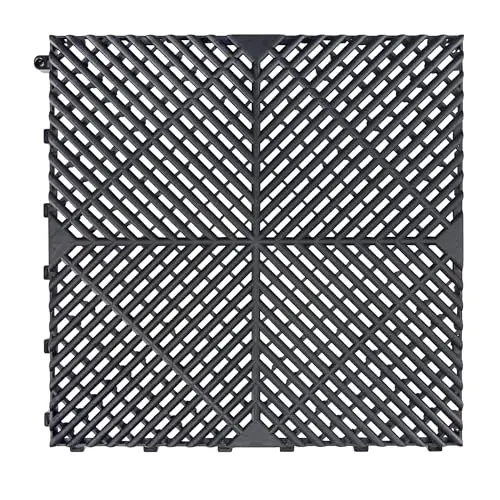
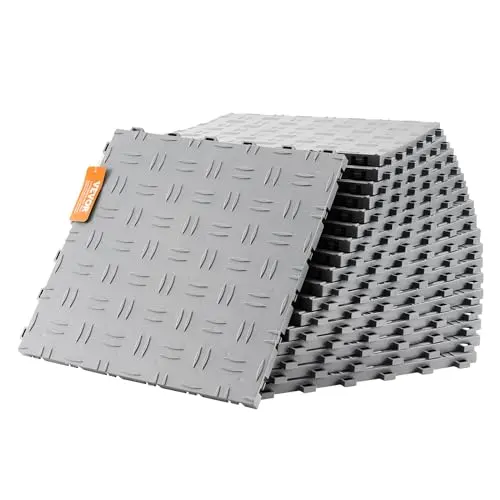
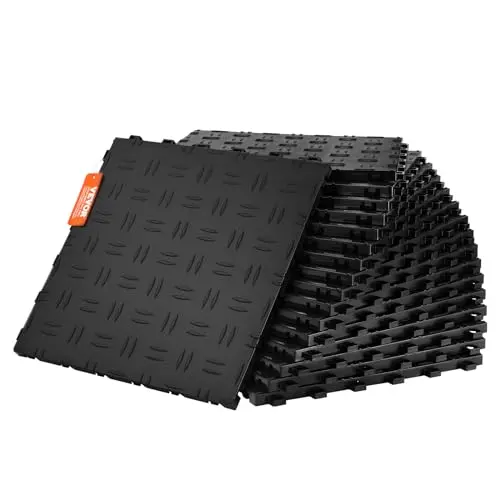
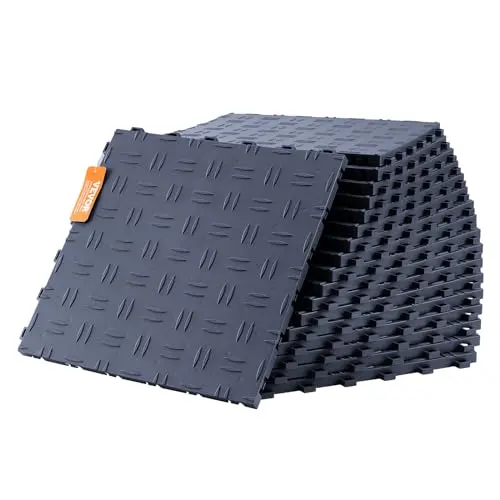
Rigid polypropylene tiles commonly use a snap-together structure with ribs or channels beneath the visible surface. They can create a crisp modular appearance, allow air movement under some designs, and make individual pieces replaceable. Compare the manufacturer’s guidance for rolling loads, jack use, temperature expansion, surface texture, and subfloor preparation.
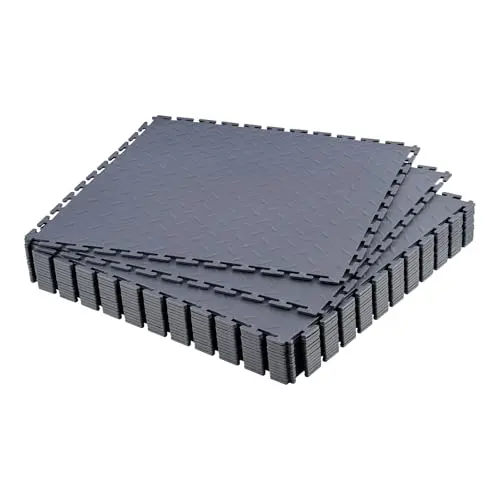
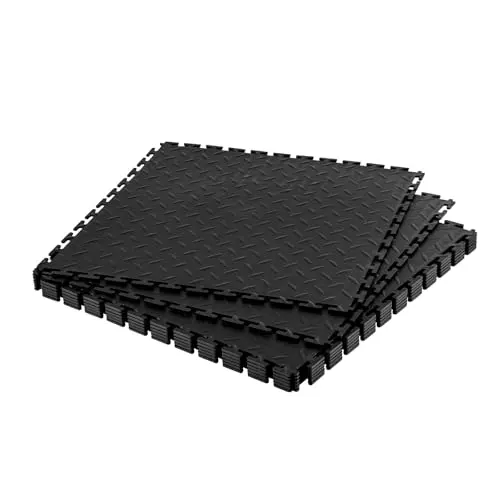
Flexible PVC tiles tend to feel denser and may transmit less sharp footfall noise, depending on thickness and subfloor. They can conform to minor surface variation differently from rigid tiles, but flexibility does not mean they can bridge significant slab defects. Review stain, tire-mark, chemical, heat, and dimensional-stability information for the exact product.
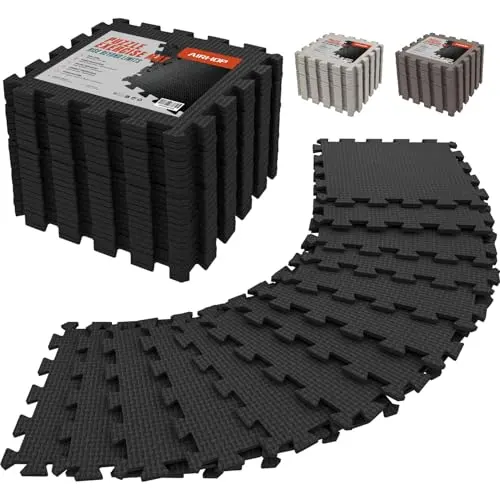
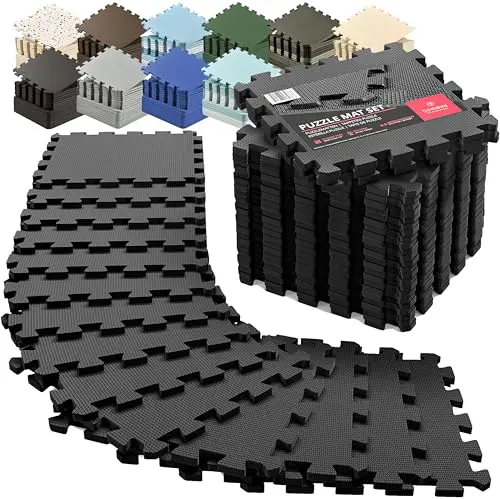
Foam and soft exercise tiles can be useful in designated fitness or comfort zones, but they should not be assumed suitable for vehicle parking or concentrated equipment loads. Rubber-like products also vary widely. Use the stated application and load limits rather than grouping every dark interlocking tile into one performance category. The guide Interlocking Garage Floor Tiles: PVC vs Polypropylene explains these material tradeoffs in more detail.
Solid, Ribbed, and Vented Surfaces
Solid tiles create a continuous top surface that can be easier to sweep and can prevent small parts from dropping through. Ribbed or textured surfaces may add grip and disguise minor dust, but deep texture can require more effort to clean. Vented tiles allow water and debris to move through openings into the space below, which can help in wet parking zones only when the slab, drainage path, and cleaning plan support that design.
A drainage tile does not eliminate moisture; it changes where the moisture goes. Water trapped beneath any modular floor can still require ventilation, drying, and periodic access. In snowy or rainy climates, plan how slush, salt, and grit will be removed. If the goal is movable containment beneath one vehicle, Garage Floor Mats may be a simpler solution than covering the entire floor.
Check the Concrete Before Covering It
Clean the slab and inspect it in good light. Look for active cracks, loose material, flaking coatings, high spots, depressions, moisture, and transitions at doors or drains. Modular tiles can disguise discoloration and some cosmetic imperfections, but they do not repair a structural problem or stop water entry. Significant movement, moisture, or deterioration should be evaluated and corrected appropriately before installation.
Rigid tiles need adequate support. A pronounced ridge or void can make connections rock or place stress on edges. Flexible tiles may tolerate small texture changes differently, but still need a reasonably sound base. Follow the tile manufacturer’s flatness and subfloor requirements. Our guide to Garage Floor Tiles for Uneven or Cracked Concrete helps distinguish surface appearance from conditions that need repair.
Load Ratings Need Context
Published capacity figures may refer to distributed loads, individual tiles, compression tests, or specific laboratory conditions. They do not automatically describe the effect of a narrow jack wheel, metal stand foot, loaded cabinet caster, or vehicle tire turning in place. Read the test conditions and use restrictions. When concentrated loads are expected, ask whether load-spreading pads or another approved method is required.
Never use decorative flooring as a substitute for safe lifting support. Jacks, ramps, and stands must remain on a stable surface and be used according to their manufacturers’ instructions. Confirm whether the tile maker permits lifting equipment on the installed floor. The focused guide Best Garage Floor Tiles for Cars, Tools, and Heavy Equipment covers rolling and concentrated-load questions.
Temperature Expansion and Perimeter Planning
Garage temperatures can swing with seasons, open doors, sunlight, and parked vehicles. Many modular materials expand and contract as temperature changes. Perimeter gaps, transition pieces, room dimensions, and direct-sun exposure therefore matter. Follow the exact manufacturer’s expansion guidance instead of installing tightly against every wall, post, cabinet, or step.
Check the garage-door sweep, side door, attic stair, appliance clearance, floor drain, and fixed cabinets before selecting tile thickness. Edge ramps can create a cleaner transition at an exposed boundary. Plan transitions where vehicle tires cross onto the tile so unsupported edges do not become the weak point.
Measure Tiles by Installed Coverage
Measure the floor as rectangles and calculate the square footage of each zone, then subtract only areas that truly will not receive tile. Use the product’s actual installed dimensions rather than assuming the advertised nominal size. Convert that coverage into packs, account for the layout pattern, and add a practical allowance for perimeter cuts, damaged pieces, and future repairs.
Complex spaces with posts, steps, cabinets, and angled walls require more cuts than an open rectangle. Color patterns also create their own pack requirements. Keep several matching spare tiles when possible because later production runs can vary in shade or connection design. Use How Many Garage Floor Tiles Do You Need? for a step-by-step quantity plan.
Garage Floor Tiles Versus Epoxy
Interlocking tiles and epoxy coatings solve the floor differently. Tiles create a removable layer and usually allow individual damaged pieces to be replaced. Epoxy bonds to a properly prepared slab and can create a seamless surface, but its result depends heavily on moisture conditions, surface preparation, application, and cure. Tiles may be faster to put into service, while coatings avoid joints and the under-floor space of modular systems.
Compare the total project rather than only material price: preparation, tools, edge pieces, waste, downtime, repairability, moisture management, and expected service conditions all affect value. The guide Garage Floor Tiles vs Epoxy organizes these lifecycle tradeoffs without treating either choice as universally superior.
When Garage Floor Mats Are the Better Choice
Tiles make sense when the goal is a modular floor system or a defined installed zone. Mats make sense when protection should move, lift for cleaning, contain drips beneath a vehicle, or cover only a high-use area. A containment mat can be practical for winter slush, while an anti-fatigue or utility mat can serve one workbench without changing the full floor.
Many garages use both: tile in the main workshop or walking zones and a targeted mat beneath a vehicle, mower, or messy service area. Compare the full Garage Floor Mats collection before committing to complete coverage. This separation keeps tile-shopping intent focused on installed modular flooring and mat-shopping intent focused on movable protection.
Installation Checklist
- Confirm application: verify the exact tile is approved for the intended garage, vehicle, and equipment use.
- Inspect the slab: address active cracks, moisture, loose material, and major high or low spots.
- Measure clearances: include doors, drains, cabinets, posts, appliances, steps, and transitions.
- Plan expansion: follow the manufacturer’s perimeter-gap and temperature guidance.
- Test the layout: dry-fit several rows to avoid narrow slivers at visible edges.
- Order by coverage: use installed tile dimensions, pack quantities, cuts, pattern, and spare pieces.
- Protect connections: use compatible edges and transition ramps where the system begins or ends.
- Plan cleaning: know how debris or water will be removed from the surface and beneath vented tiles.
Continue the Garage Floor Tile Guide Series
- Best Garage Floor Tiles for Cars, Tools, and Heavy Equipment
- Interlocking Garage Floor Tiles: PVC vs Polypropylene
- Garage Floor Tiles vs Epoxy
- How Many Garage Floor Tiles Do You Need?
- Garage Floor Tiles for Uneven or Cracked Concrete
Complete the surrounding garage with organized Garage Storage, stable Workbenches, and the broader Garage Equipment & Car Care hub. Use only confirmed live paths when planning how flooring meets cabinets, shelving, and vehicle-care areas.
Garage Floor Tile FAQs
Can garage floor tiles go directly over concrete?
Many interlocking systems are designed for installation over a suitable concrete slab, but suitability depends on flatness, moisture, coatings, cracks, and the specific product. Inspect the slab and follow the manufacturer’s preparation and installation requirements.
Do vented tiles prevent mold or moisture problems?
No tile can guarantee that. Vented designs may allow air and water movement, but the source of moisture, slab drainage, climate, cleaning, and drying practices still matter. Correct water-entry or slab problems rather than using flooring to hide them.
Can a floor jack or jack stands sit on garage tiles?
Only when the tile manufacturer permits the specific concentrated-load use and the lifting-equipment instructions are followed. Decorative tiles are not structural safety equipment. A stable approved lifting surface and any required load-spreading method are essential.
Can individual damaged tiles be replaced?
Many interlocking systems allow individual pieces to be disconnected and replaced, which is a major advantage of modular flooring. Confirm the connection method and keep matching spares because colors and locking profiles can change over time.
Final Buying Perspective
Choose garage floor tiles by verifying the slab, load type, material, moisture path, temperature movement, and installation details before choosing color or pattern. A well-matched tile system can create a clean modular floor and simplify local repairs. A poorly matched system can shift, stain, trap debris, or fail under concentrated loads. If full coverage is unnecessary, targeted garage floor mats may deliver the protection with less installation.
Disclosure:
Compare garage floor tiles by material, surface design, load suitability, coverage, and installation requirements.
Shop Garage Floor Tiles on Amazon