Small Parts Organizers Buying Guide
The best organizer does more than hold a large number of pieces. It helps you identify the correct fastener quickly, remove it without mixing neighboring sizes, return leftovers to the proper location, and notice when a category needs restocking. Those jobs depend on compartment dimensions, visibility, labeling, lid or drawer behavior, and where the system sits in the garage.
This collection is intentionally focused on hardware-scale storage. For large household items and bulk supplies, browse Garage Storage Bins. For hand and power tools, use Tool Boxes or the broader Garage Tool Storage hub. Small Parts Organizers are for fasteners and components that benefit from individual compartments, bins, or drawers.
Inventory the Parts Before Choosing the Organizer
Start with a representative sample rather than an empty cabinet. Gather the smallest washers, most common screw and bolt sizes, long anchors, fuses, terminals, fittings, and any awkward pieces you intend to store. Group them by the characteristic used during selection: diameter, length, thread, material, head style, electrical rating, or project. That system should determine the compartment layout.
Count common parts loosely and note which categories arrive in bulk packages. A compartment that fits ten sample screws may be too small after the next refill. Leave growth space for frequently replenished items and reserve a few empty cells for new hardware. Our guide to choosing small-parts compartment sizes explains the measurement process.
Drawer Cabinets for Permanent Inventory
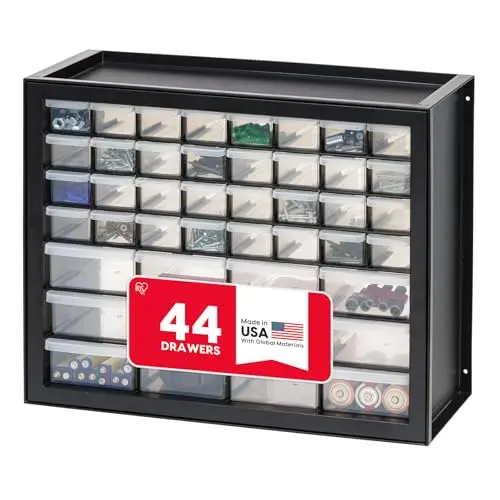
Multi-drawer cabinets provide dense, visible storage near a fixed workbench. Clear fronts or clear labels make it easy to scan several categories without opening every drawer. Removable drawers help with refilling and carrying one category a short distance, but they should have stops or retainers that prevent accidental spills.
Measure the cabinet’s full loaded depth and the clearance needed to remove the longest drawer. Wall-mounted cabinets must attach to a suitable structure with hardware appropriate to the wall and expected load. Benchtop cabinets consume surface area but can move when the garage layout changes. Compare those tradeoffs in wall-mounted versus benchtop parts organizers.
Portable Compartment Cases for Project Hardware
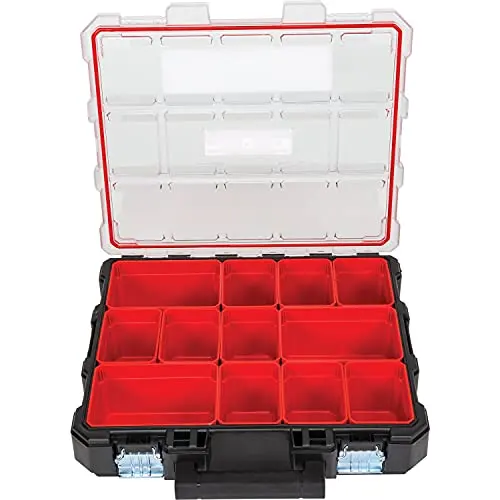
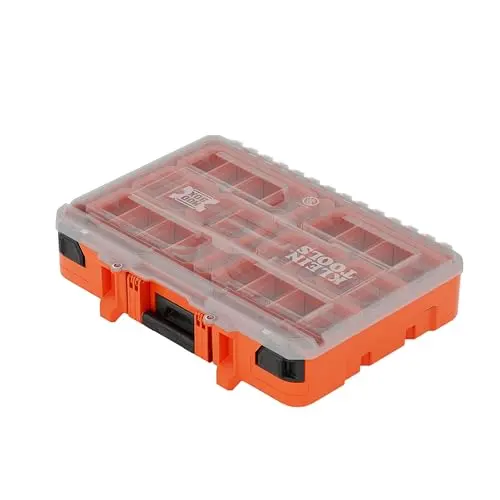
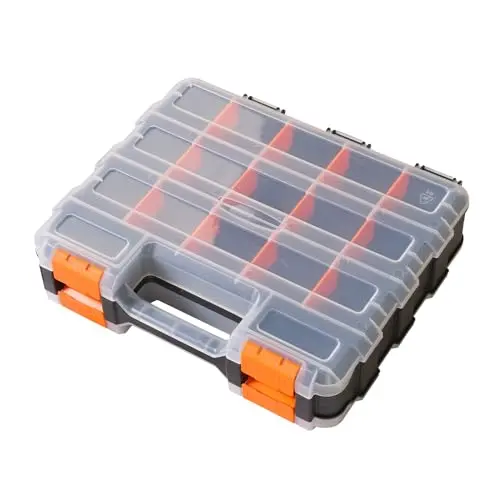
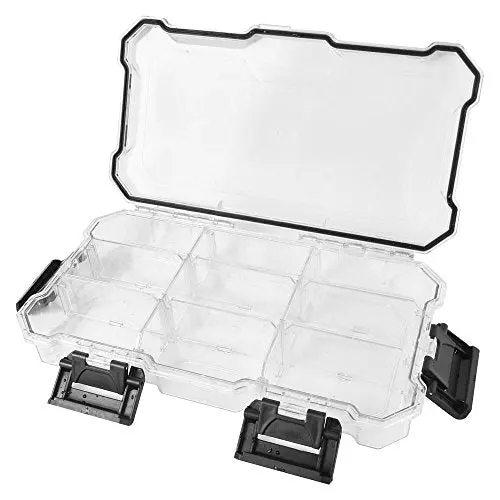
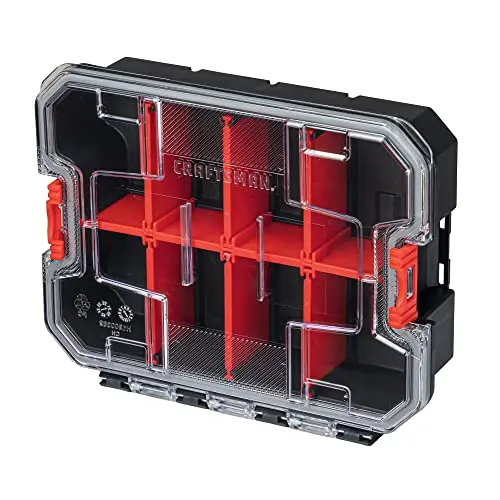
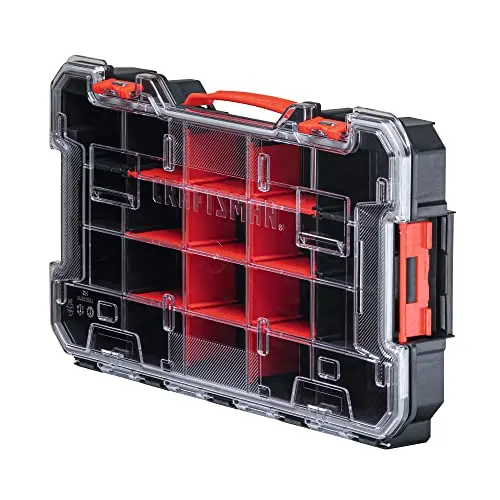
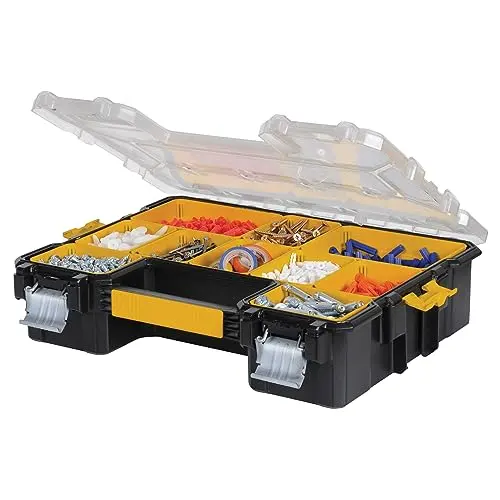
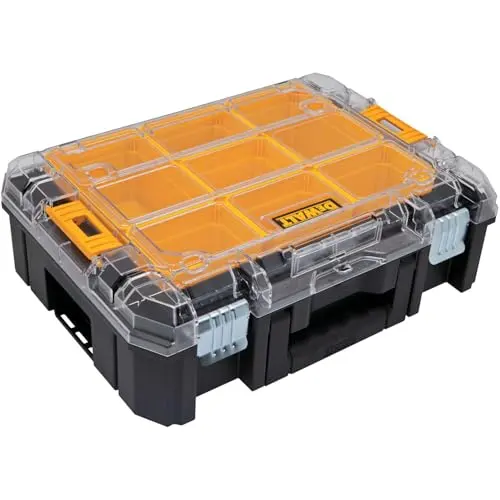
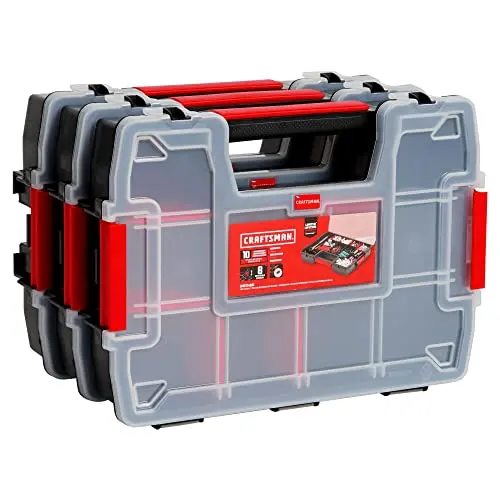
Portable cases bring selected fasteners to a vehicle, outdoor repair, or another room. A clear lid can speed identification, while secure latches and a rigid perimeter help keep compartments closed during transport. Check whether dividers extend tightly to the lid; even a small gap can allow washers and short screws to migrate when the case is carried vertically.
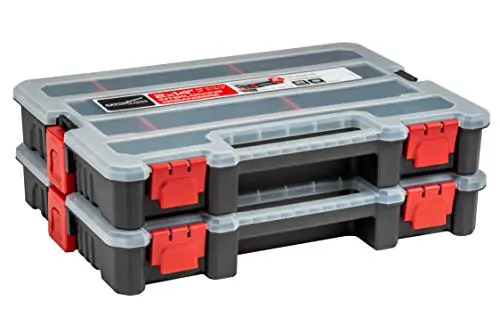
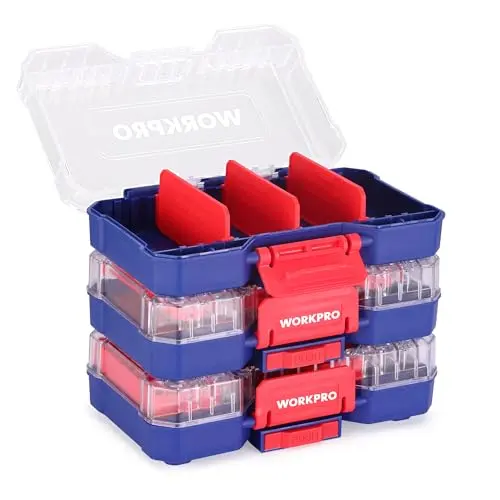
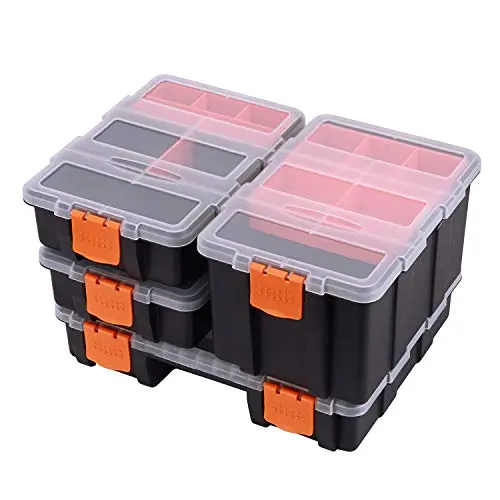
Handle placement changes how parts settle. If the case hangs upright, test whether removable cups or dividers remain captured. Stackable or modular cases are useful only when the connection does not hide labels or make one frequently used case difficult to remove. See drawer cabinets versus portable organizers for a workflow-based comparison.
Removable Bins Versus Fixed Dividers
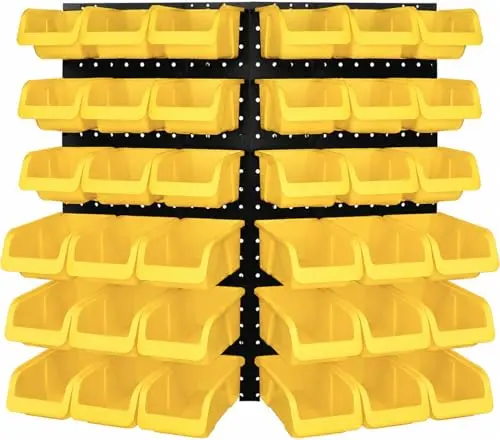
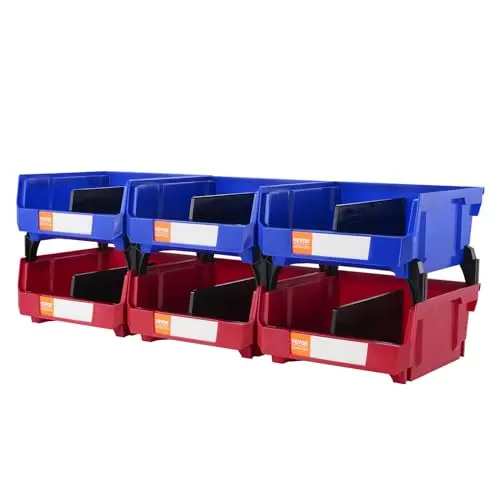
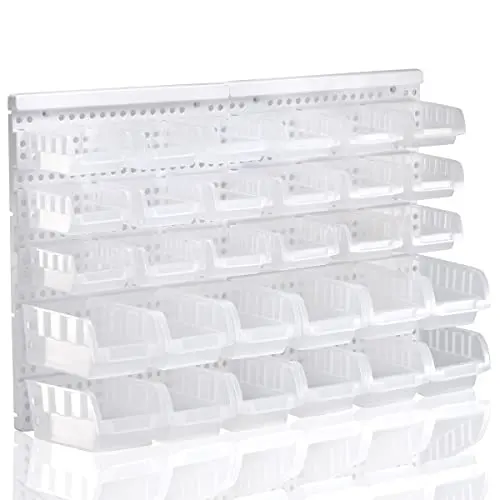
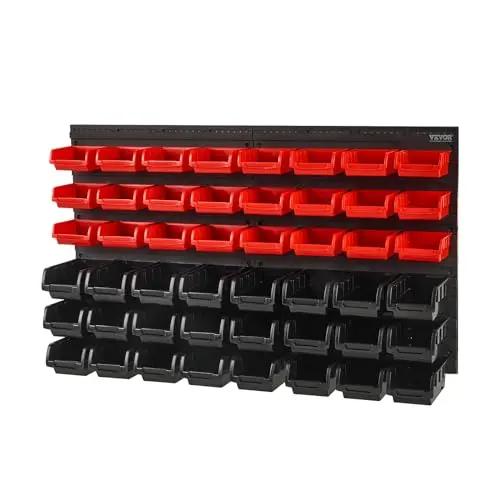
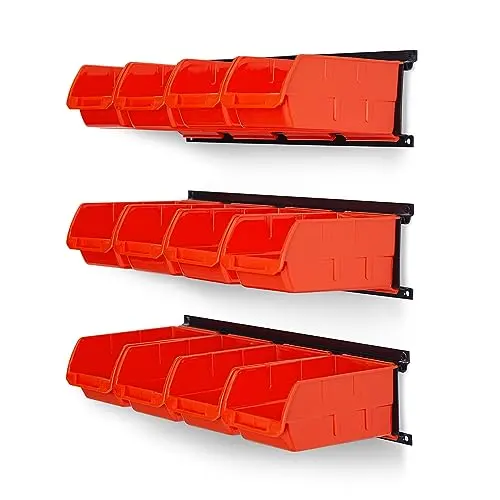
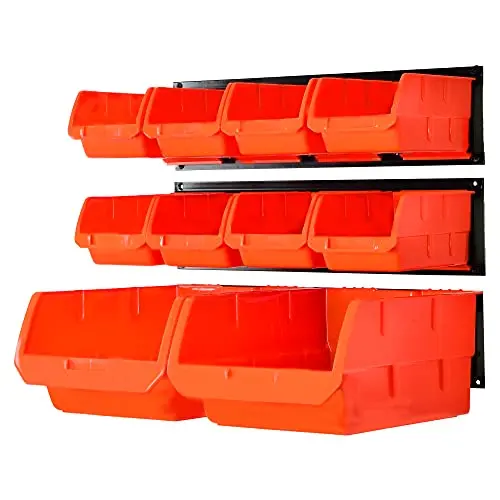
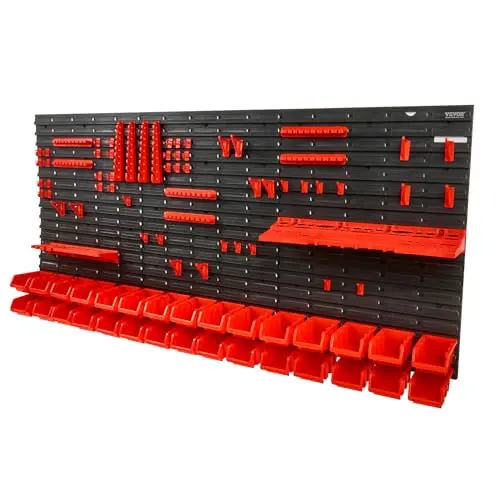
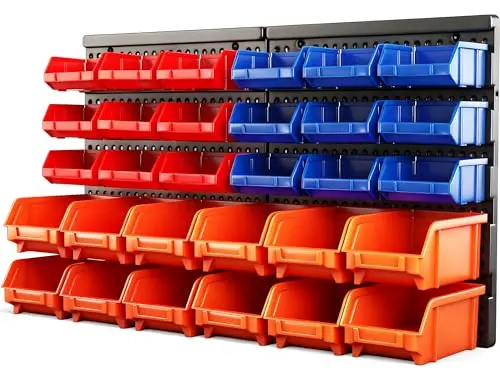
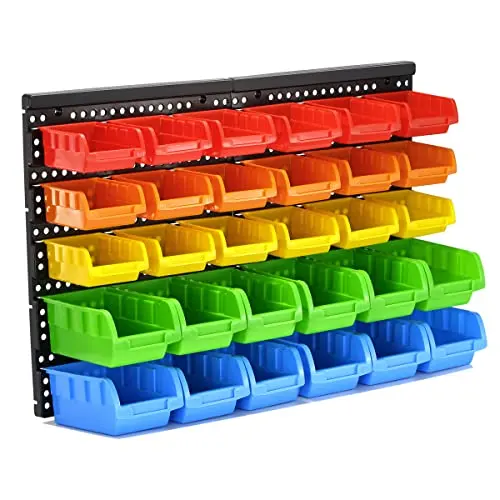
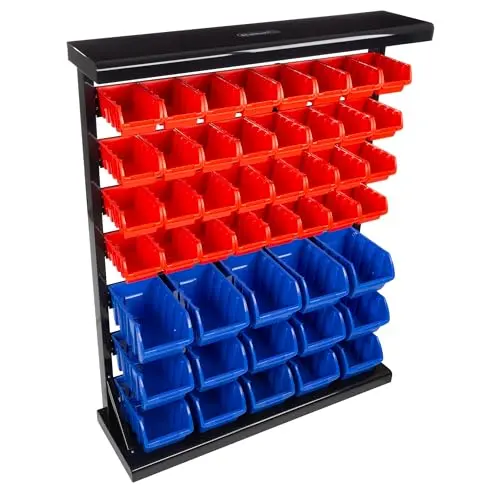
Removable bins make it easy to carry one hardware category to the project, pour in a refill, and clean a single container. They also let the user rearrange the system as inventory changes. Check the bin lip, handle area, label surface, and how securely each bin sits when the rack is bumped.
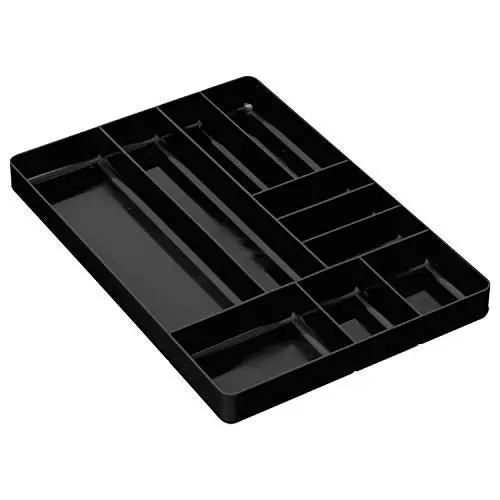
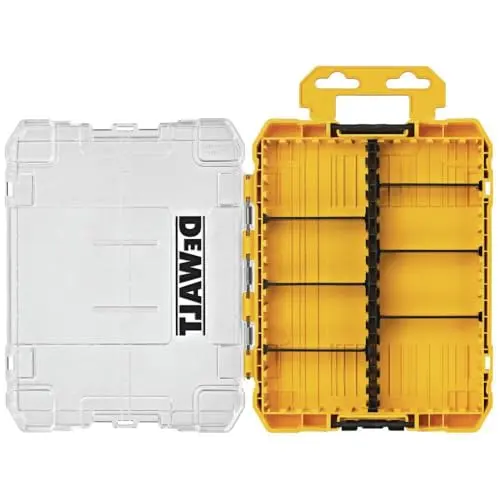
Fixed or adjustable dividers use space efficiently inside portable cases and drawers. Divider channels must hold the panels tightly enough that small parts cannot slip beneath them. Consider the smallest stored item, not only the average screw. Our removable bins versus fixed dividers guide helps match the layout to the hardware.
Choose Compartments for Fingers as Well as Parts
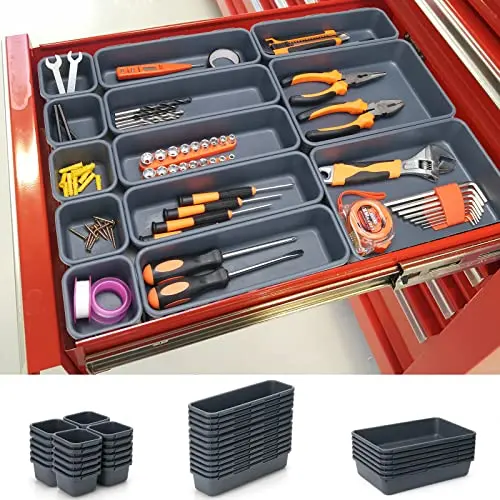
A cell can physically hold a fastener and still be frustrating if fingertips or gloved hands cannot retrieve it. Leave room to pinch the part or tip the bin without spilling adjacent categories. Shallow trays provide fast access to washers and bits, while deeper drawers suit larger quantities of bolts or fittings.
Use long compartments for anchors, driver bits, cotter pins, and other narrow pieces that waste space in square cells. Very tiny components may need lidded cups inside a larger drawer. A mixed system often works better than repeating one compartment size across the entire inventory.
Build a Labeling System That Survives Restocking
Labels should record the fact that changes the selection. For threaded hardware, that may include diameter, thread pitch, and length. For electrical parts, it may be gauge range or connector type. Avoid labels such as “small silver screws” that fail when two similar categories arrive.
Place labels where they remain visible with the organizer installed and the drawer closed. A printed label plus a sample fastener taped inside the drawer can help when several household members use the system. Keep abbreviations consistent and leave a simple index near large cabinets.
Prevent Mixed Hardware
Mixing usually occurs during transport, hurried returns, overfilled compartments, or a lid gap. Do not fill a cell so high that parts sit above the divider. Close every latch before lifting a case, and carry it in the orientation specified by the manufacturer. If a divider bows or no longer reaches the lid, replace it rather than accepting repeated sorting work.
At the bench, use a temporary project tray for removed hardware instead of returning uncertain pieces immediately. Sort leftovers after the job while the correct location is still clear. Small magnetic dishes can help with steel fasteners during disassembly, but verify material and keep electronics or sensitive items away when appropriate.
Wall-Mounted, Benchtop, or Mobile?
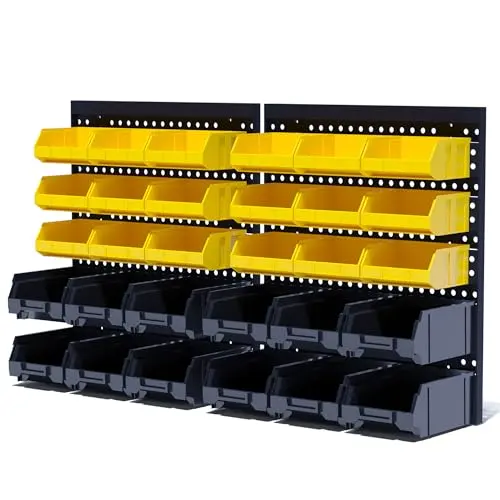
Wall-mounted racks preserve bench space and keep parts visible, but the mounting surface, loaded weight, and comfortable reach height matter. The highest bin should remain easy to read and remove without climbing. Avoid placing open bins where a vehicle door, long board, or carried tool can strike them.
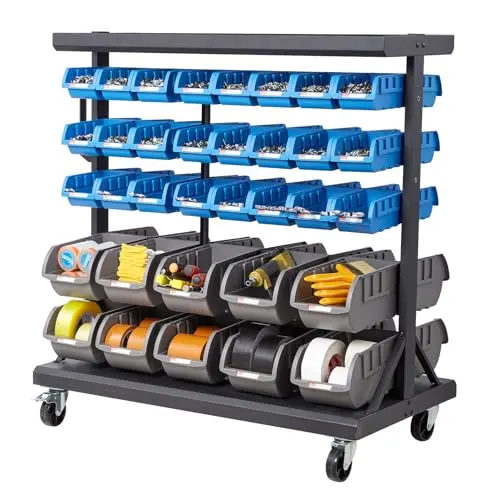
Benchtop units are easier to reposition and do not require wall installation, though they occupy valuable work surface. Mobile racks suit shared work zones when wheels, locks, and bin retainers handle the loaded system. They should park outside the vehicle path and remain stable when a bin is removed from one side.
Keep the System Distinct From General Bins and Tool Boxes
Large garage bins group bulky categories such as seasonal supplies, cleaning products, or sports gear. Tool boxes protect and transport tools. A small-parts organizer divides hardware-scale inventory into selectable categories. Some products combine these functions, but the small-parts section should still have secure, appropriately sized compartments.
If the main need is wall access to frequently used hardware, consider pairing organizers with Pegboard Accessories or Garage Pegboard Storage. Keep heavy tools on suitable hooks or shelves and use bins for the fasteners they require.
Plan the Workbench Zone
Place the most frequently used parts between roughly knee and shoulder height and within a short step of the Workbench. Rarely used inventory can occupy lower or more distant zones. Keep labels illuminated with Garage Lighting so similar sizes can be read without removing several drawers.
A well-planned Garage Organization system gives every returned part a home. Browse Garage Products or Garage Equipment & Car Care when coordinating the organizer with the larger workshop.
Maintenance and Restocking
- Vacuum or wipe drawers before adding clean new parts.
- Replace cracked bins, damaged latches, and loose dividers.
- Recheck wall fasteners if the rack shifts or sags.
- Keep each compartment below the lid or drawer-clearance line.
- Update labels when the stored specification changes.
- Consolidate duplicate categories before expanding the cabinet.
Inspect portable cases after drops and wall systems after impacts. A container that no longer closes securely can undo hours of sorting. Do not use an organizer as a shipping container, seat, step, or support unless it is specifically rated for that purpose.
Small Parts Organizer Checklist
- Inventory the smallest, largest, and most common parts.
- Choose categories by selection method, not color alone.
- Verify compartment dimensions and finger access.
- Check divider-to-lid gaps for portable cases.
- Confirm latches, handles, and stacking connections.
- Measure drawer removal and mounting clearance.
- Reserve room for growth and bulk refills.
- Plan clear, consistent labels.
Frequently Asked Questions
What is the best way to organize screws, nuts, and bolts?
Separate them by the specifications used to choose them, such as diameter, length, thread, and material. Use clear labels and leave enough space to retrieve and restock each category without mixing neighbors.
Are removable bins better than drawers?
Removable bins are excellent for carrying one category and refilling quickly. Drawers provide dense, permanent storage and may protect parts better from dust. Many garages benefit from both.
How do I stop parts from moving between compartments?
Use dividers that meet the lid, avoid overfilling, latch every closure, and carry the case in its intended orientation. Replace warped dividers or damaged lids.
Should small parts organizers be wall-mounted?
Wall mounting saves bench space when the wall, fasteners, and organizer are suitable for the loaded weight. Keep every bin within safe standing reach.
How much empty space should I leave?
Leave enough room for normal refills and several new categories. Filling every compartment immediately encourages unrelated hardware to be mixed later.
Final Verdict
A useful small-parts system begins with an inventory and a labeling plan. Choose drawer cabinets for dense permanent storage, portable cases for project mobility, and removable bins for quick access and refilling. Keep compartments sized for both the hardware and the hand retrieving it, and maintain a clear boundary between small components, general garage bins, and complete tool storage.
Keep Small Parts in Their Own Storage Layer
Use the Garage Hardware & Small-Parts Organization hub to place fastener drawers and cases alongside—but distinct from—general bins, pegboard, and tool boxes.