How Much Weight Can a Shop Stool Hold?
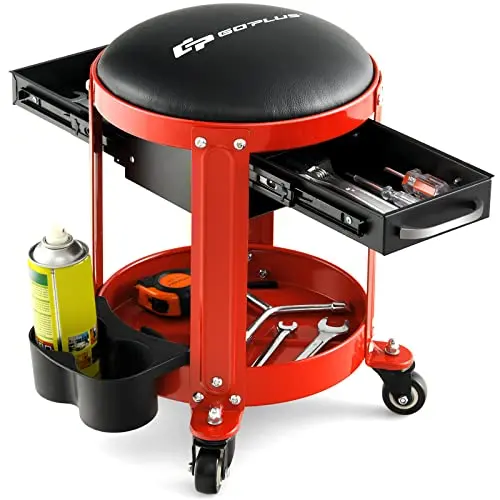
A shop stool’s capacity label is essential, but it is only one part of safe selection. The rating applies to a complete, correctly assembled model under defined conditions; it does not promise stability during impact, leaning, or use on damaged flooring. Understanding how the seat, height mechanism, frame, and casters share the load helps shoppers compare realistically.
Quick Answer
Choose a shop stool whose manufacturer-stated capacity covers the seated user, clothing, and anything intended to rest on the seat. Then separately inspect base width, maximum seat height, caster ratings, fastener design, and instructions. Do not count a storage-tray rating as seating capacity, and do not assume a larger capacity makes a tall or narrow stool more stable.
Compare heavy-duty shop stools on Amazon after confirming dimensions, capacity, and floor fit.
At-a-Glance Comparison
| Component | Question | Failure warning |
|---|---|---|
| Seat mount | How is the seat attached? | Looseness or rocking |
| Lift/post | Is capacity valid across the height range? | Drifting or sudden drop |
| Frame/base | How wide is the footprint? | Bent tube or cracked weld |
| Casters | Are all wheels rated and secure? | Flat spots, wobble, loose stems |
Read the Rating for the Exact Model
Use the label, manual, or manufacturer listing for the exact stool model and configuration. Similar-looking stools can use different casters, cylinders, frames, or seat mounts. A marketplace headline is not a substitute for model-specific documentation, especially when variants share one page.
Check whether the rating describes the seat, the complete stool, or a separate tray. Confirm required assembly and floor conditions. If documentation conflicts, treat the lower verified figure as the practical limit until the manufacturer clarifies it.
Include the Complete User Load
Capacity planning starts with the seated user, including normal work clothing and items carried on the body. A heavy tool briefly placed on the lap or seat adds to the load. Under-seat storage may have its own limit and should not be added to the stool’s seating capacity.
Allowing some practical margin can reduce the chance of operating exactly at the stated ceiling, but capacity alone should not drive the purchase. An oversized model that is too tall, too wide, or poorly suited to the floor can create a different problem. The goal is adequate verified capacity within a design that fits the task.
See current shop stool options on Amazon after confirming dimensions, capacity, and floor fit.
Understand Static Versus Dynamic Loading
Sitting down sharply, dropping onto the edge, or rolling into an obstruction creates forces different from settling onto the center of the seat. The label should never be read as permission for impact, bouncing, standing, or leaning beyond the base. Enter the stool under control and keep body weight centered during adjustment.
Side loads matter too. Pulling a resistant fastener or reaching behind the user can transfer weight toward one caster and twist the seat mount. Stand for high-force work and reposition the stool before reaching. A higher number on the label does not make improper loading safe.
See How Components Share the Load
The load path usually runs from the seat through a plate or post, into the lift mechanism or frame, and then through the base to the casters or feet. The complete assembly is only as dependable as its connections. Compare fastener count, base construction, weld quality, and whether replacement wear parts are available.
On rolling models, each caster sees a changing share as the user moves. A wheel crossing a seam can carry more load momentarily. On adjustable models, the post and base must remain stable at maximum height. Evaluate the system rather than focusing on cushion thickness or frame-tube appearance.
See current shop stool options on Amazon after confirming dimensions, capacity, and floor fit.
Capacity Is Not the Same as Stability
Weight capacity describes a supported load; stability describes resistance to tipping or uncontrolled movement. A narrow, tall stool may have strong components and still feel less planted when the user reaches sideways. Base diameter, seat height, caster placement, center of gravity, and floor slope all influence stability.
Compare the footprint at the lowest and highest useful settings. Sit so the feet can help control position without becoming caster stops. If the intended work requires frequent off-center reaching, a broader base or lower seat may be more important than additional capacity.
Check Adjustable Mechanisms Carefully
Pneumatic cylinders should hold the selected height without gradual sinking, sudden release, or excessive side play. Threaded posts should engage cleanly and lock as designed. Confirm whether the manufacturer states one capacity for the entire adjustment range or imposes conditions at certain settings.
Never dismantle a pressurized lift unit or improvise a spacer. If the stool slips under load, remove it from service. A failed height mechanism can drop the user and change the center of gravity abruptly, even when the frame appears intact.
See current shop stool options on Amazon after confirming dimensions, capacity, and floor fit.
Inspect Casters, Feet, and Floor
A capacity rating assumes that every contact point supports the stool properly. A missing foot, seized caster, bent stem, or deep floor joint can concentrate load unexpectedly. Verify that all wheels touch a firm, level surface and rotate without wobble before sitting.
Clean thread, wire, hair, and grit from the axles. Look for cracked wheel material, loose mounting hardware, and caster forks that no longer swivel smoothly. Stationary stools need the same attention at rubber feet and floor-contact pads.
Know When Replacement Is the Right Choice
Stop using a stool with a cracked weld, bent frame, loose seat mount, slipping lift, damaged caster socket, or missing structural fastener. Paint damage alone may be cosmetic, but distortion, movement, or a growing gap indicates a structural issue that should not be ignored.
Use model-correct replacement parts where the manufacturer supports service. Do not drill new mounting holes, weld unknown frame material, or substitute a caster solely because its stem fits. If the load path has been damaged or repair information is unavailable, replacement is the safer decision.
Compare Capacity Without Losing Task Fit
Write down the required load, lowest and highest useful seat heights, full base width, and floor type. Eliminate any model whose verified capacity is inadequate, then compare the remaining stools by stability, work height, and mobility. This order prevents an impressive rating from distracting from poor fit.
For a fixed bench, check the stool against workbench height and foot support. For mobile garage tasks, compare caster behavior with the actual floor and nearby tool storage. The complete station matters more than a capacity number viewed alone.
Pre-Purchase Checklist
- Capacity is verified for the exact model and configuration
- User, clothing, and intended seat load are included
- Tray and drawer ratings are treated separately
- Base width and maximum height suit the task
- All casters or feet contact a firm, level floor
- Adjustment mechanism holds position without play
- Damaged structural parts trigger removal from service
Browse shop stools on Amazon after confirming dimensions, capacity, and floor fit.
Document the Rating and Recheck After Assembly
Photograph or record the model label and keep the assembly instructions. After the first several uses, recheck accessible fasteners because a small amount of settling can reveal looseness at the seat plate or base. Capacity remains meaningful only while the stool is complete, correctly assembled, and free of damaged load-bearing parts.
If a marketplace page groups several variants, match the capacity to the exact frame, cylinder, caster set, and seat you are buying. Similar upholstery does not establish identical structure. When the exact model cannot be verified, do not borrow the number from a neighboring option.
Frequently Asked Questions
What is a typical shop stool weight capacity?
Ratings vary widely by design, so a typical number is not a reliable selection method. Use the exact model’s current label or manual.
Should I buy the highest-capacity stool available?
Not automatically. First require adequate capacity, then compare height, base stability, casters, and fit with the work.
Does sitting down hard exceed the rating?
Impact creates a different load than controlled sitting and should be avoided regardless of the printed capacity.
Does the tool tray count toward capacity?
The manufacturer may specify a separate tray limit. Do not assume that tray capacity can be added to the seating rating.
Can I replace casters with any same-size wheel?
No. Fit alone does not establish load, geometry, or compatibility. Use parts approved for the model or obtain manufacturer guidance.
Final Verdict
Treat the stated capacity as a necessary limit, not a complete safety verdict. Verify the exact model, include the full user load, and then examine the seat mount, adjustment system, frame, base, and casters. A properly sized stool used on a level floor and inspected regularly is a better choice than a higher-rated model that does not fit the job.
Compare shop stools on Amazon after confirming dimensions, capacity, and floor fit.
After checking capacity, follow the Workshop Ergonomics Guide to fit the stool to the bench, floor, mat, task force, reach zones, and storage path.