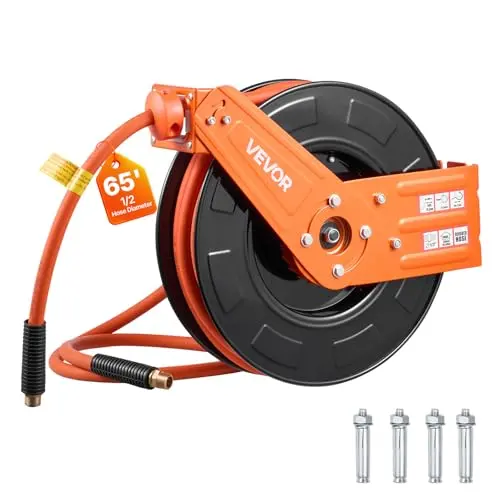
Air Hose Reels Buying Guide
An air hose reel is part of the compressed-air delivery system, not merely a storage accessory. The compressor, regulator, couplers, lead-in hose, swivel, reel plumbing, working hose, and tool must all support the intended pressure and airflow. Begin with the broad Air Compressors parent collection, then use this page to choose the hose-management layer. For smaller mobile sources, compare Portable Air Compressors.
Start With Tool Air Demand
Write down the pressure and airflow requirements for the tools you actually plan to run. Tire inflation and short blow-gun use place different demands on a system than continuous sanding, grinding, or spraying. A reel cannot create airflow the compressor does not provide, and a restrictive hose can reduce pressure at the tool while the compressor gauge still looks acceptable. Use the tool and compressor documentation rather than choosing solely by the reel’s maximum PSI headline.
Choose Hose Diameter Before Reel Size
Inside diameter influences resistance and airflow. A 3/8-inch hose is common for many garage tools and is lighter and easier to handle than a comparable 1/2-inch hose. A 1/2-inch hose can support higher-flow work or longer runs but adds weight, bulk, and cost. The correct answer depends on tool demand, run length, compressor fittings, and the pressure loss acceptable at the point of use. See 3/8-Inch vs 1/2-Inch Air Hose Reels for the complete comparison.
Use Only the Length the Garage Needs
Longer hose reaches more locations, but it also creates more pressure loss, more material to rewind, and a larger reel. Measure the route from the mounting point to the farthest realistic work zone, including vertical travel and a modest working loop. Do not add large amounts of unused length as insurance. A reel placed well can often serve the same garage with less hose than one mounted wherever wall space happened to be open.
What Size Air Hose Reel Do I Need? combines diameter, length, tool demand, pressure, and mounting clearance into one sizing process.
Match Every Working-Pressure Rating
The reel, hose, swivel, fittings, couplers, lead-in hose, and accessories must each be rated for the system. The lowest rated component controls the allowable working pressure. Do not confuse burst pressure with normal working pressure, and do not assume a compressor’s tank rating makes every downstream part suitable. Before connecting a reel, compare its maximum working pressure with the regulated supply and the exact hose installed on it.
Rubber, PVC, and Hybrid Hose
Rubber hose is often flexible and durable but can be heavier. PVC can be lighter and economical, yet stiffness can increase in some temperatures and handling conditions. Hybrid constructions try to balance weight, flexibility, and abrasion resistance. Material labels are not enough by themselves: compare the exact hose’s temperature range, pressure rating, bend-radius guidance, chemical compatibility, cover, and fitting construction. Rubber vs PVC vs Hybrid Air Hose Reels explains the practical tradeoffs.
Retractable Versus Manual Reels
A spring-retractable reel can make cleanup quick and keep slack off the floor. Compare locking positions, controlled-rewind behavior, guide rollers, hose replacement procedure, spring service instructions, and the safe pull direction. A manual crank reel has fewer automatic parts and gives the operator direct control, but requires deliberate winding and room to reach the handle. Open-frame designs make the hose visible; enclosed housings protect and tidy the mechanism. Compare both formats in Retractable vs Manual Air Hose Reels.
Plan the Mounting Point
The mount should shorten the working route without placing the hose across doors, vehicles, stairs, hot surfaces, sharp edges, or busy walkways. Wall mounting can serve a defined work bay. Ceiling mounting may free wall space but changes the pull angle and service access. A swivel bracket increases coverage while adding moving clearance. Use the maker’s template, fasteners, permitted orientation, and structural requirements. Do not rely on drywall alone when the instructions call for attachment to framing or another load-bearing surface.
Before drilling, follow the route analysis in Where Should You Mount an Air Hose Reel?. Coordinate the reel with Workbenches and the larger Garage Organization plan.
Protect the Swivel and Lead-In Hose
The inlet connection should not place rigid plumbing strain on the reel swivel. Use only the connection method specified by the manufacturer; many reel instructions call for an appropriate flexible lead-in. Support the supply line so the swivel is not carrying pipe weight or misalignment. Match thread type and fitting size, apply only the recommended sealant, and check for leaks using the safe method specified in the instructions.
Control Rewind and Hose Travel
Guide the hose during rewind rather than letting a spring-loaded line snap toward the housing. Keep hands, clothing, tools, and bystanders clear of the travel path. Pull in the direction supported by the rollers and avoid dragging the hose across sharp corners. Set the hose stop so enough hose remains outside the guide without allowing the connector to strike the reel. A clean rewind improves both safety and hose life.
Couplers and Fittings Must Match
Confirm fitting size, thread type, coupler profile, material, and pressure rating across the system. A connector that appears to snap together may still be the wrong profile or fail to lock completely. Secure or positively retain couplings where the manufacturer or applicable work rule requires it. Depressurize before servicing connections and never use a leak as a reason to tighten or disassemble a pressurized fitting.
Inspect Before Use
Before each work session, look for cuts, abrasion, bulges, cracks, exposed reinforcement, damaged fittings, loose mounting hardware, swivel leakage, guide damage, and poor latching. Remove unsafe hose or reel components from service. Before maintenance, isolate the supply and bleed stored pressure according to the manufacturer’s procedure. Spring cases can store mechanical energy even after air pressure is removed; do not open or adjust them outside the documented service method.
Common Air Hose Reel Mistakes
- Choosing by maximum PSI without checking airflow and hose diameter.
- Buying far more hose length than the work route needs.
- Using the burst rating as the normal working rating.
- Connecting rigid plumbing directly where a flexible inlet is required.
- Mounting into an unsupported surface or forbidden orientation.
- Allowing uncontrolled spring rewind.
- Ignoring bend radius, abrasion, leaks, or damaged couplings.
- Servicing the reel before isolating and bleeding the system.
Air Hose Reel Buying Checklist
- Tool pressure and airflow requirement
- Compressor output and regulated supply pressure
- Hose inside diameter, length, material, and temperature range
- Reel, hose, swivel, fitting, and coupler working-pressure ratings
- Mounting orientation, structure, pull direction, and service clearance
- Retraction, latch, guide, hose-stop, and swivel design
- Replacement-hose and service-parts availability
- Inspection, pressure-relief, and maintenance instructions
Air Hose Reels FAQs
Is a 3/8-inch air hose reel enough for a garage?
It can be for many intermittent garage tools, but the answer depends on tool airflow, hose length, fittings, compressor output, and acceptable pressure loss. Use documented requirements.
Does a longer hose reduce air pressure?
A longer run generally increases resistance and pressure loss, especially with smaller diameter, restrictive fittings, or high airflow. Size the entire delivery path for the tool.
Can an air hose reel mount on the ceiling?
Only if that model permits the orientation and the structure, fasteners, clearance, pull direction, and service access meet its instructions.
Should I use rubber or hybrid air hose?
Compare the exact hose’s flexibility, weight, abrasion resistance, temperature range, pressure rating, bend radius, and environment rather than choosing by material name alone.
Can I service a pressurized reel?
No. Isolate the supply and bleed the line using the manufacturer’s procedure before service. Spring components may retain mechanical energy and require separate precautions.
Final Verdict
The right air hose reel delivers the airflow the tool needs, stays within every component’s pressure rating, reaches the work zone without excessive length, and mounts where the hose can travel safely. Start with tool demand and hose diameter, then compare material, retraction style, mounting, swivel design, couplers, and serviceability. Keep Air Compressors as the parent system and use this collection to organize the delivery path.
Compare retractable and manual air hose reels for garage compressor systems.
Shop Air Hose Reels on AmazonExplore more verified workshop categories through Garage Products and Garage Equipment & Car Care.