Rubber vs PVC vs Hybrid Air Hose Reels
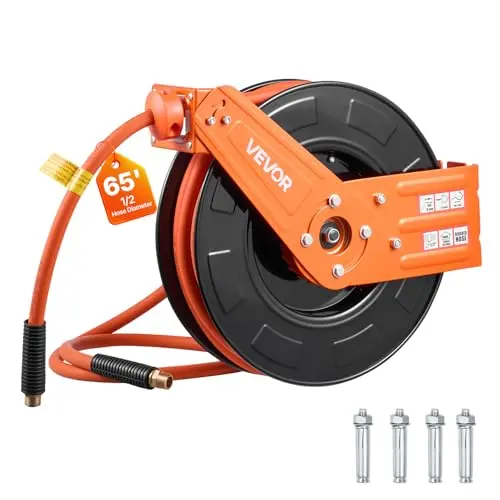
Rubber, PVC, and hybrid air hoses behave differently in weight, flexibility, temperature, abrasion, and handling, but the material name is only a starting point. Choose from the exact hose’s documented working pressure, temperature range, minimum bend radius, chemical compatibility, reinforcement, fittings, and whether the reel is approved to carry that construction and length.
Quick Answer
Rubber hose is often flexible and abrasion resistant but heavier; PVC can be lighter and economical but may stiffen more in cold conditions; hybrid polymer aims to balance flexibility, weight, and durability. Always compare the exact temperature, pressure, bend, and chemical ratings for the hose supplied on the reel.
Start by comparing the options in our Air Hose Reels collection, then use this guide to read ratings and compatibility details with a more critical eye. The broader Air Compressors section also helps place this purchase in the rest of a functional garage plan.
Compare Air Hose Reels on Amazon after you have written down your required hose inside diameter, length, working pressure, fitting size, rewind design, and mounting location. A short requirement list prevents an attractive feature from hiding a poor fit.
Material names are broad categories
Two hoses labeled rubber or hybrid can use different compounds, reinforcement, and jacket designs. Treat material as the start of comparison, then read the model-specific data sheet.
Rubber hose is often valued for flexibility and abrasion resistance across common shop conditions. It may lie flatter and remain easier to handle in cool weather than some PVC lines, but it is generally heavier and can mark surfaces depending on the compound. Verify the exact product’s temperature, oil, ozone, and pressure ratings rather than assuming all rubber formulations perform alike.
Rubber hose characteristics
Quality rubber lines are often chosen for flexibility, drag resistance, and demanding shop use. The tradeoffs can include greater weight, surface marking, odor, and cost, depending on compound and construction.
PVC hose can be light, economical, and easy to clean, making it practical for moderate-duty use within its stated environment. Some PVC constructions become noticeably stiffer in lower temperatures or hold more coil memory. That behavior can affect pull force, rewind, and tool handling. Read the exact temperature and bend guidance, especially for an unheated garage.
See current air hose reel choices on Amazon and compare the same fields across several models rather than jumping between unrelated feature lists.
PVC hose characteristics
PVC hoses can be light, smooth, and affordable. Some become noticeably stiffer as temperature falls or retain coil memory. Reinforcement and formulation determine how large those differences are.
Hybrid polymer hoses aim to combine useful flexibility with lower weight and manageable coil memory. “Hybrid” does not identify one universal recipe, so compare specifications line by line. Reinforcement, cover thickness, fitting attachment, pressure rating, temperature range, and chemical resistance may differ substantially between products that use the same broad material label.
Hybrid polymer characteristics
Hybrid formulations are marketed to combine lower weight with useful flexibility and reduced memory. Performance is not guaranteed by the word hybrid, so verify temperature range, working pressure, abrasion claims, and warranty.
Temperature limits apply to the complete hose in service, not just the room thermometer. Air temperature, radiant heat, sun exposure near an open door, and contact with hot components can all matter. Cold can change flexibility and bend behavior. Keep the hose away from exhaust parts, heaters, welding, grinding sparks, and any surface or chemical the manufacturer excludes.
A useful cross-check is the wider Air Compressors catalog, because the surrounding equipment can expose a compatibility issue that is easy to miss when the air hose reel is considered alone.
Browse more Air Hose Reels options with those system limits in mind.
Reel behavior matters
A flexible hose can layer evenly and retract more smoothly, while a stiff or memory-prone hose may resist the guide. Drum diameter, spring force, rollers, and the hose stop also affect winding.
Abrasion is often concentrated at corners, guide rollers, the floor, and the coupler end. Inspect those locations for cuts, flattening, cracks, exposed reinforcement, blistering, and damaged fittings. A tough cover does not make a hose suitable for being crushed by vehicles or dragged over sharp metal. Route and mount the reel so ordinary use avoids predictable damage.
Match the garage environment
Consider winter temperature, oils and solvents, welding or grinding exposure, rough concrete, outdoor use, and whether the hose may contact painted vehicle surfaces. No single material wins every condition.
Minimum bend radius matters on a reel because the hose curves repeatedly around the drum and guide. A material that feels flexible in hand can still be damaged by a radius tighter than its published limit. Confirm that replacement hose diameter, construction, and length are approved for the reel; do not force additional turns onto a drum that lacks capacity.
Check Air Hose Reels specifications and availability only after confirming that the listing identifies the size, rating, and included hardware clearly.
Use specifications to finish the choice
Compare inside diameter, length, working pressure, temperature range, fitting material, reinforcement, weight, bend behavior, and replacement-hose availability. Select the reel as a complete system.
Fittings and crimped ends are part of the hose choice. Check thread type, coupler profile, material, working pressure, strain relief, and repair instructions. Remove a hose from service if the fitting loosens, leaks, bends abnormally, or shows damaged attachment. Never tighten, disassemble, or improvise a repair while the line is pressurized.
How to Compare a Shortlist Without Getting Distracted
Build a simple comparison table with one row for each candidate and columns for the requirements that can actually disqualify a product. Put hose inside diameter, length, working pressure, fitting size, rewind design, and mounting location first. Add dimensions, included parts, installation limits, warranty terms, and the model number. Leave a cell blank when the listing does not provide an answer; do not quietly replace missing information with an assumption. A product with fewer decorative features but complete documentation is often easier to evaluate responsibly than a feature-heavy listing that hides basic limits.
Next, separate requirements from preferences. A compatible connection, adequate rating, permitted mounting orientation, and safe operating environment are requirements. Color, extra accessories, a remote, or a particular storage style may be preferences. This order prevents a convenient feature from outweighing a mismatch that will affect every use. It also makes price comparisons fair because the remaining candidates are capable of the same core job.
Plan for Ownership, Not Just Installation Day
Think through inspection, cleaning, adjustment, storage, and eventual replacement before fixing a model to the garage. Moving parts, flexible materials, electrical contacts, seals, brackets, and fasteners can all need attention depending on the category. Service access matters. A product mounted tightly behind shelving or above a vehicle may be frustrating to inspect even if it technically fits. Keep the manual and model information where another household member can find them.
After installation, use a calm first-use test. Keep people, vehicles, and valuable tools clear, operate at a light demand, and watch the mounting, connections, controls, and working path. Stop for unexpected heat, noise, movement, leakage, binding, odor, or damaged insulation. A successful light test does not authorize exceeding the published rating; it simply confirms that assembly and basic operation appear normal before regular work begins.
A Simple Buying Checklist
Before ordering, write down the intended job, maximum demand, available space, mounting or storage location, environmental exposure, and every required connection. Confirm that the stated rating applies to the complete assembled product and to the way you will operate it. Look for understandable instructions, replacement parts where relevant, and a return path if the dimensions or interface do not match.
Do not treat customer photos or star averages as substitutes for specifications. Reviews are useful for spotting repeated usability issues—awkward latches, weak guides, confusing instructions, premature leaks, or difficult adjustment—but the model number and manual establish what the product was designed to do. Recheck the listing before purchase because sellers can combine variations on one page.
Shop Air Hose Reels on Amazon once the checklist is complete, or return to our Air Hose Reels page to compare the category in context.
Match Hose Material to the Garage Environment
Choose rubber when documented flexibility and abrasion performance justify the extra weight; choose PVC when the exact model’s temperature and handling limits suit a lighter-duty environment; consider hybrid when you want a balance, but verify the specific formulation instead of relying on the label. In every case, the working-pressure and temperature ratings must cover the intended compressor system.
Material also changes how the reel feels, so compare it with retractable versus manual reel designs and the 3/8-inch versus 1/2-inch diameter guide. Inspect the hose before use and isolate and bleed the line before any documented service procedure.
Frequently Asked Questions
Is the most expensive air hose reel automatically the best?
No. Price can reflect materials, capacity, accessories, or brand support, but the best choice is the model whose documented limits match your job and installation without paying for features you will not use.
Can I rely on a marketplace title for sizing?
No. Titles are shortened and variations are sometimes grouped. Verify the exact model number, manual, dimensions, ratings, included fittings or hardware, and any operating limits before ordering.
How much extra capacity should I buy?
Use the manufacturer’s selection guidance and the demands of the complete system. Sensible margin can help, but arbitrary oversizing can add weight, cost, electrical demand, or awkwardness without improving the job.
What should I inspect when it arrives?
Confirm the model and rating label, examine the housing and working components for damage, inventory the parts, read the instructions, and test operation without exceeding limits before putting valuable tools or vehicles nearby.
When should I ask a professional?
Get qualified help when the installation changes fixed wiring, depends on uncertain structural support, involves code requirements, or operates near hazards that the product documentation does not clearly address.
Final Verdict
Rubber hose is often flexible and abrasion resistant but heavier; PVC can be lighter and economical but may stiffen more in cold conditions; hybrid polymer aims to balance flexibility, weight, and durability. Always compare the exact temperature, pressure, bend, and chemical ratings for the hose supplied on the reel. The winning choice is the one supported by clear documentation and installed within every stated limit. Compare the complete system, not one headline feature, and plan how the product will be inspected, stored, or serviced after the first use.
For a final side-by-side look, compare Air Hose Reels on Amazon. The link uses the exact collection-specific destination supplied for MyGarageProducts.com.