Best Electric Garage Heaters for Uninsulated Garages
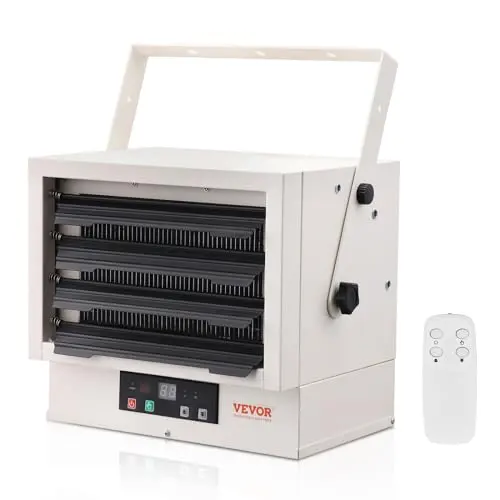
An uninsulated garage loses heat quickly through its ceiling, walls, overhead door, windows, slab edges, gaps, and repeated air changes. The best electric-heating plan often combines realistic spot-heating goals, targeted air sealing, documented output, thermostat control, and a safe electrical installation instead of expecting one oversized heater to overcome every loss.
Quick Answer
For an uninsulated garage, prioritize realistic spot heating, high-output equipment sized by a heat-loss calculation, strong thermostat control, and safe permanent installation. Infrared heat can help at a fixed workstation because it warms occupants and surfaces directly, but no heater can cancel severe leakage efficiently.
Start by comparing the options in our Electric Garage Heaters collection, then use this guide to read ratings and compatibility details with a more critical eye. The broader Garage Equipment and Car Care section also helps place this purchase in the rest of a functional garage plan.
Compare Electric Garage Heaters on Amazon after you have written down your required voltage, wattage, circuit requirements, heat pattern, insulation, room volume, and installation method. A short requirement list prevents an attractive feature from hiding a poor fit.
Set expectations before shopping
An uninsulated garage loses heat through the ceiling, walls, doors, windows, cracks, and repeated air changes. A heater may improve comfort while running yet allow temperature to fall rapidly after it stops.
Set an achievable goal before shopping. Warming one occupied bench for a two-hour project is different from maintaining the whole garage at living-space temperature through a cold night. Spot heating may deliver useful comfort with less output, while whole-room heating or freeze protection deserves a load calculation that reflects the actual envelope and climate.
Spot heat can be the smarter goal
If only one bench is occupied, a properly located radiant heater or controlled fan-forced unit may provide useful comfort without attempting to condition the whole volume. Keep all required clearances.
Radiant heat can be effective at a fixed workstation because it warms people and surfaces directly without first heating all the room air. The heater still needs the correct line of sight, distance, angle, and clearances. Shelving, a raised door, or a vehicle can block the path, so test the occupied layout rather than evaluating an empty garage.
See current electric garage heater choices on Amazon and compare the same fields across several models rather than jumping between unrelated feature lists.
Whole-garage heat needs calculation
For freeze protection or sustained room temperature, measure dimensions and obtain a heat-loss estimate that reflects local winter conditions. High wattage also means circuit and installation requirements that must be planned first.
Whole-garage heat must replace continual losses. Measure the room volume, note every uninsulated surface and draft, and define the outdoor and indoor design temperatures. A high-wattage heater may raise the temperature while running yet lose progress rapidly when the overhead door opens. Professional load calculations are valuable when the target is dependable sustained comfort.
Features that matter most
A dependable thermostat, multiple output stages, overheat protection, suitable mounting, clear controls, and a fan or radiant pattern appropriate to the layout are more important than exaggerated coverage claims.
Controls matter because an uninsulated space can swing quickly. A dependable thermostat, staged output, fan delay, and clear restart behavior help manage runtime and comfort. Remote controls and timers are secondary. Thermostat cycling does not lower the nameplate electrical load while the elements are energized, so the circuit must support full demand.
A useful cross-check is the wider Garage Equipment and Car Care catalog, because the surrounding equipment can expose a compatibility issue that is easy to miss when the electric garage heater is considered alone.
Browse more Electric Garage Heaters options with those system limits in mind.
Improve the envelope where practical
Weather-stripping, sealing obvious gaps, insulating the garage door or ceiling, and addressing drafts can improve comfort and reduce runtime. Any building-envelope change should respect ventilation, moisture, and code requirements.
Improve the envelope where it is appropriate. Weather-strip the overhead door, seal obvious penetrations, and consider suitable ceiling, wall, or door insulation. Preserve required ventilation, moisture management, and fire separation, and follow local requirements. Reducing drafts can improve comfort at the same heater output and often matters more than moving to the next wattage tier.
Safety in a working garage
Keep heaters away from cardboard, fabric, sawdust accumulation, fuels, solvents, and vehicle work involving flammable vapors. Follow the exact clearance and environmental limitations in the manual.
Keep heating equipment away from cardboard, fabrics, sawdust, finishes, fuel, aerosols, and any activity that can release flammable vapor. An ordinary electric garage heater is not approved hazardous-location equipment. Maintain the exact intake, discharge, mounting, and combustible clearances stated by the manufacturer even when storage expands during the season.
Check Electric Garage Heaters specifications and availability only after confirming that the listing identifies the size, rating, and included hardware clearly.
A better buying process
Define occupied zone and schedule, estimate heat loss, decide between spot and whole-space heating, confirm available electrical service, then compare documented output and control. Buy the installation, not merely the heater box.
Use a disciplined sequence: define the occupied zone and schedule, measure the envelope, reduce obvious safe-to-correct leakage, estimate the remaining heat loss, confirm electrical capacity, and then compare models. This avoids paying for a large heater whose output is lost through the door or whose circuit cannot be installed economically.
Prioritize Improvements by Comfort Gained
Begin with inexpensive observations: check daylight around the overhead door, feel for drafts, inspect weather-stripping, and note whether the ceiling or door is insulated. Do not close combustion-air openings or seal around equipment without understanding their purpose. Address safe, obvious leakage first, then reassess whether the goal is a warm workstation or a conditioned room.
If only one zone is occupied, compare targeted infrared and directional fan-forced options. If the entire garage needs dependable temperature control, use a load calculation and plan the electrical installation before choosing equipment. A higher-capacity heater is not automatically wasteful, but it should be justified by measured loss and paired with controls that prevent uncomfortable cycling.
Coordinate the plan with garage organization so seasonal storage cannot invade the heater clearance zone. Use the heat-pattern guide and the voltage comparison to finish the specification.
Separate Air Leakage From Insulation
Air sealing and insulation solve related but different problems. Weather-stripping can reduce cold air entering around a door, while insulation slows heat moving through the door, ceiling, and walls. An uninsulated but reasonably tight garage may still cool quickly through its surfaces; a well-insulated garage with a large door gap can lose warm air rapidly. Inspect both before assuming wattage is the only solution.
Start with work that can be done without compromising ventilation, fire separation, moisture control, or equipment clearances. Replace damaged perimeter seals, correct obvious safe-to-seal gaps, and evaluate the ceiling and overhead door. Use qualified guidance when the garage contains combustion equipment or when the purpose of an opening is uncertain.
Choose a Heating Schedule That Fits the Envelope
Continuous living-space temperatures may be expensive and unrealistic in a very leaky detached garage. A lower background setting, preheating before work, or targeted comfort during occupancy may better match the building. Do not use a timer or remote to operate a portable heater unattended; follow the exact instructions and current safety guidance.
If freeze protection is the goal, identify what actually needs protection and the lowest safe temperature. Plumbing, finishes, batteries, adhesives, and tools have different requirements. A professionally evaluated whole-space system may be more dependable than an undersized portable heater when a failure could cause damage.
Track Results After Improvements
Record outdoor temperature, starting garage temperature, heater runtime, door openings, and the temperature at the occupied zone. Repeat after weather-stripping or insulation work. This simple comparison shows whether the envelope improvement changed warm-up or cycling. It is more useful than relying on a coverage claim that was measured under unknown conditions.
Watch the thermostat location. A sensor near the heater, ceiling, cold exterior wall, or draft can misrepresent the occupied zone. Use only adjustments permitted by the manufacturer; do not relocate built-in sensors or defeat controls.
Uninsulated-Garage Checklist
- Realistic comfort or freeze-protection goal
- Air gaps, door seals, and uninsulated surfaces identified
- Safe envelope improvements considered
- Spot or whole-space heat pattern selected
- Load and electrical service evaluated
- Storage kept outside intake, discharge, and clearance zones
- Supervised operation and seasonal inspection planned
Compare electric garage heaters for leaky or uninsulated spaces on Amazon after defining the achievable heating goal.
Frequently Asked Questions
Is the most expensive electric garage heater automatically the best?
No. Price can reflect materials, capacity, accessories, or brand support, but the best choice is the model whose documented limits match your job and installation without paying for features you will not use.
Can I rely on a marketplace title for sizing?
No. Titles are shortened and variations are sometimes grouped. Verify the exact model number, manual, dimensions, ratings, included fittings or hardware, and any operating limits before ordering.
How much extra capacity should I buy?
Use the manufacturer’s selection guidance and the demands of the complete system. Sensible margin can help, but arbitrary oversizing can add weight, cost, electrical demand, or awkwardness without improving the job.
What should I inspect when it arrives?
Confirm the model and rating label, examine the housing and working components for damage, inventory the parts, read the instructions, and test operation without exceeding limits before putting valuable tools or vehicles nearby.
When should I ask a professional?
Get qualified help when the installation changes fixed wiring, depends on uncertain structural support, involves code requirements, or operates near hazards that the product documentation does not clearly address.
Final Verdict
For an uninsulated garage, prioritize realistic spot heating, high-output equipment sized by a heat-loss calculation, strong thermostat control, and safe permanent installation. Infrared heat can help at a fixed workstation because it warms occupants and surfaces directly, but no heater can cancel severe leakage efficiently. The winning choice is the one supported by clear documentation and installed within every stated limit. Compare the complete system, not one headline feature, and plan how the product will be inspected, stored, or serviced after the first use.
For a final side-by-side look, compare Electric Garage Heaters on Amazon. The link uses the exact collection-specific destination supplied for MyGarageProducts.com.
After setting realistic envelope expectations, use the Electric Garage Heater Selection Guide to connect the heating goal with voltage, heat type, mounting, clearances, controls, and operating cost.