




















How to Choose Car Ramps for Garage Maintenance
The right car ramps must fit both the vehicle and the work. Begin with the exact vehicle rather than a general label such as compact car, SUV, or truck. Record its tire width, ground clearance, front overhang, wheelbase, and the weight information needed by the ramp manufacturer. Then compare those measurements with the ramp’s usable platform width, length, rise, approach angle, and stated capacity.
A high capacity number alone does not establish compatibility. Confirm whether the published rating applies to one ramp or the pair, which vehicle types are approved, and whether any tire-size or surface restrictions apply. Leave a sensible margin instead of treating the maximum rating as an everyday target. Follow the vehicle and ramp manufacturers’ instructions whenever their procedures or limits are more specific.
Low-Profile, Polymer, Steel, and Adjustable Designs
Low-Profile Car Ramps
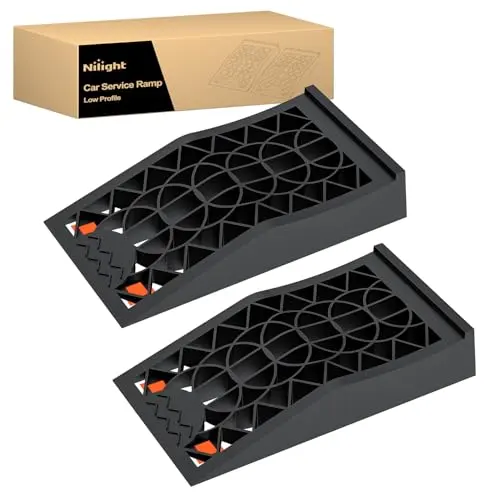
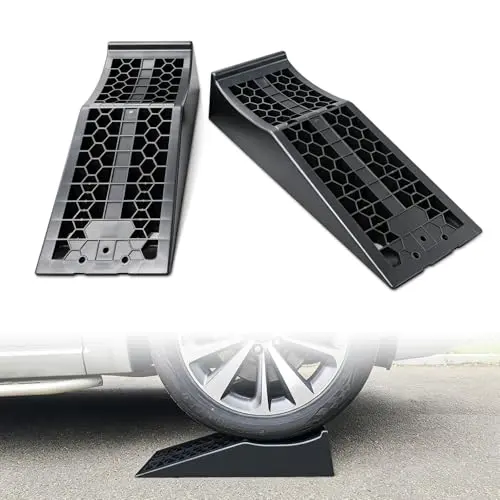
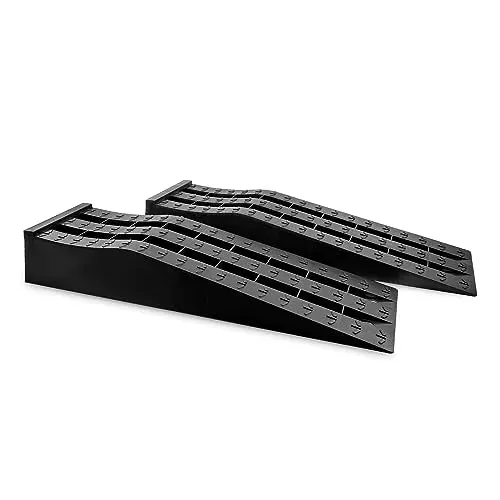
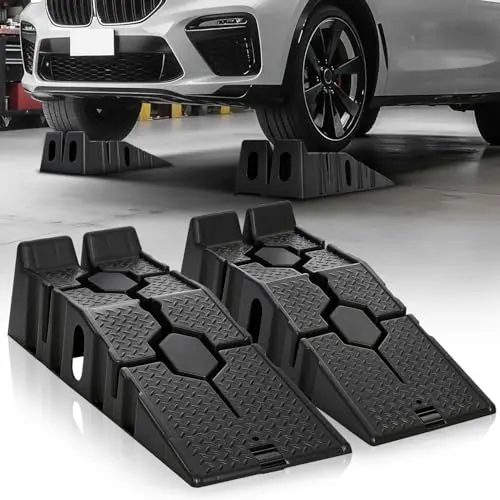
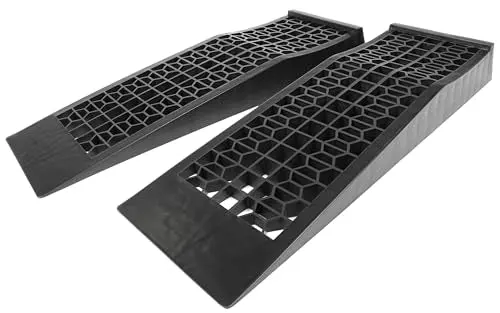
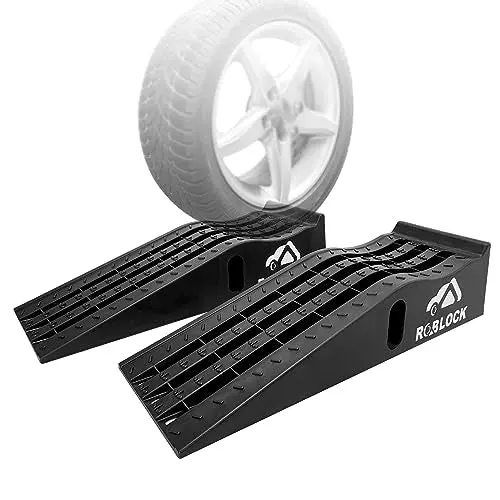
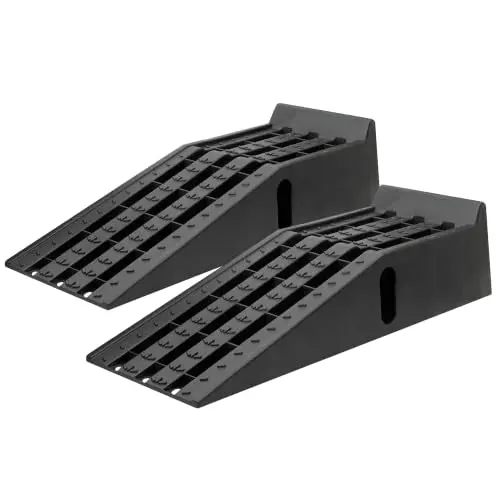
Low-clearance cars often need a longer, more gradual approach so the bumper, splitter, or underbody does not contact the ramp before the tire begins climbing. Check approach angle and ramp length together. A product marketed as low profile can still be unsuitable for a particular front overhang or modified suspension.
Polymer Ramps
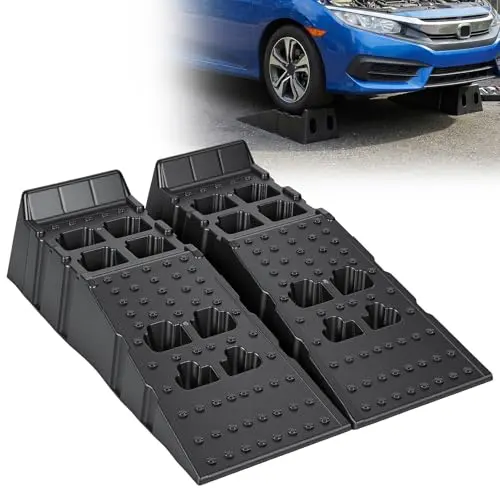
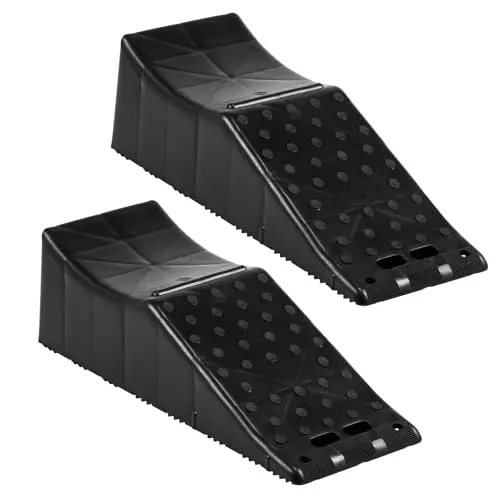
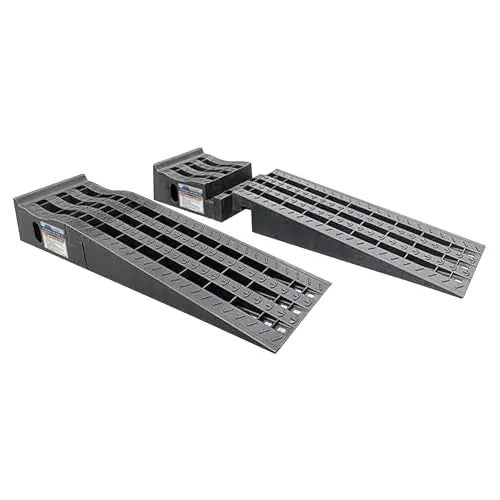
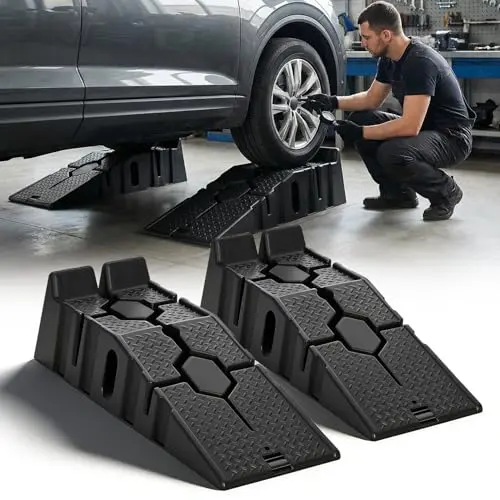
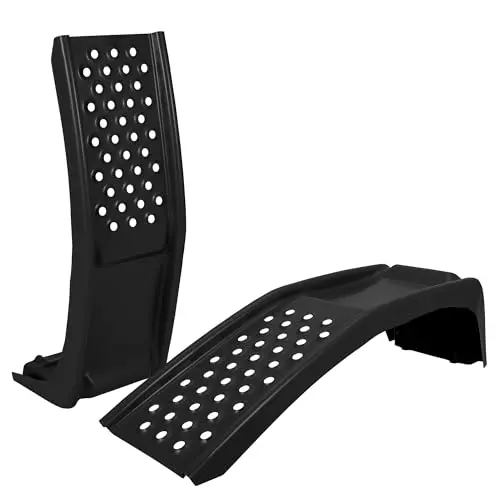
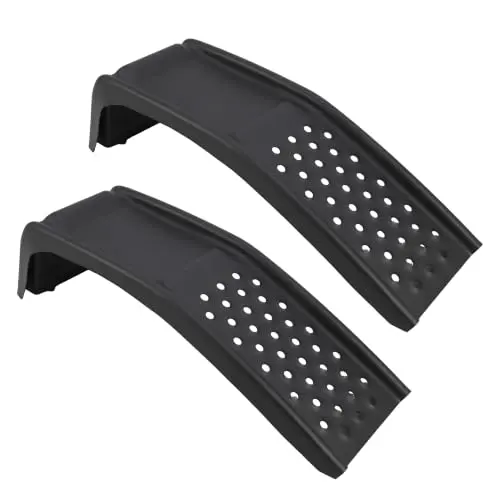
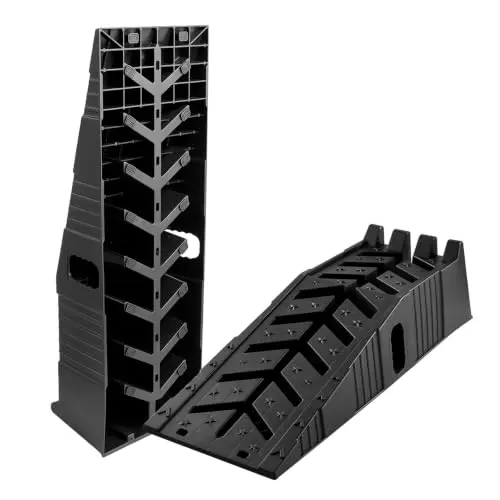
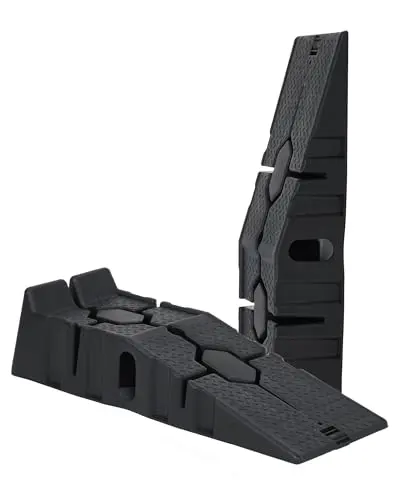
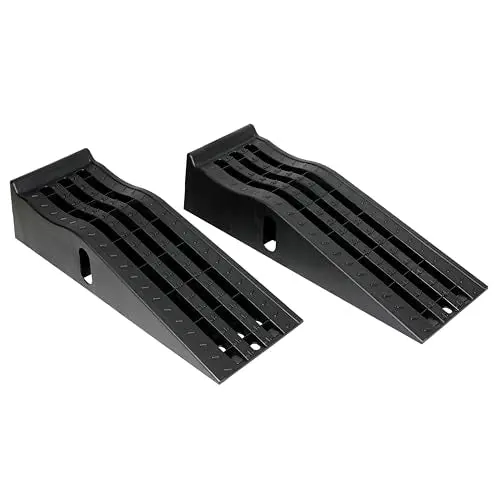
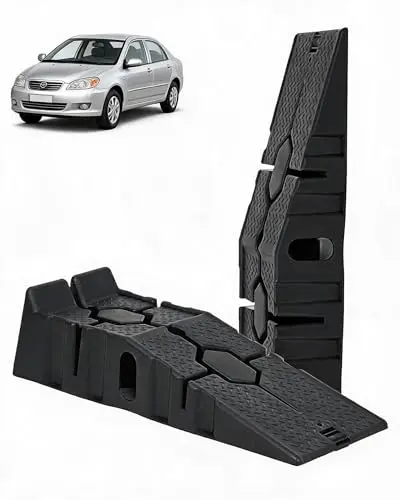
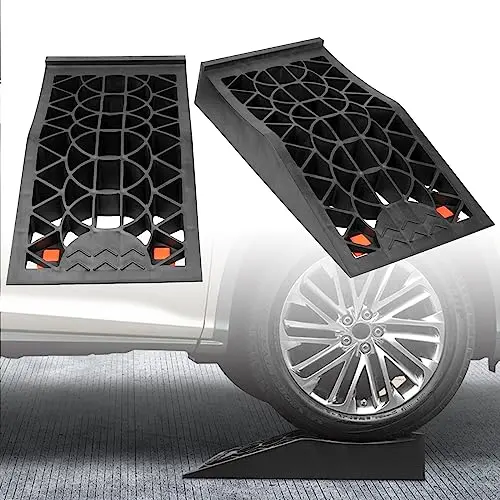
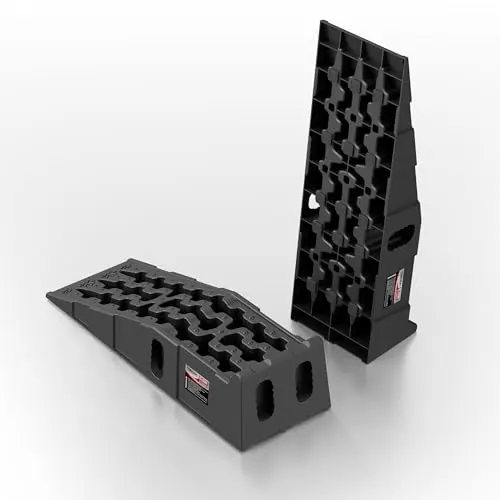
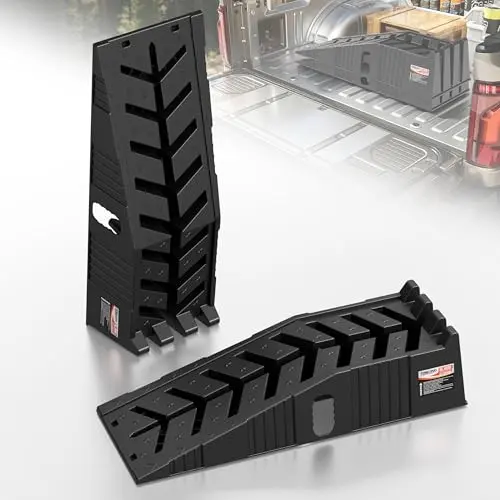
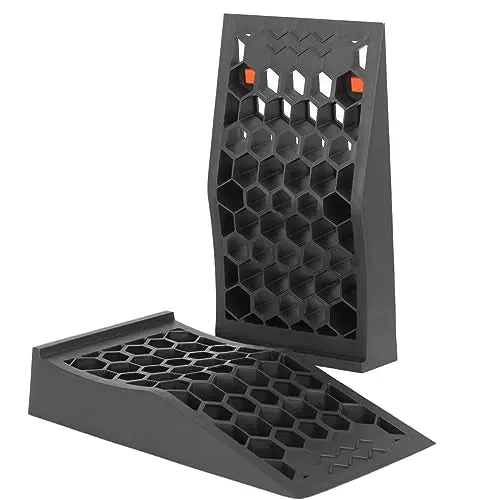
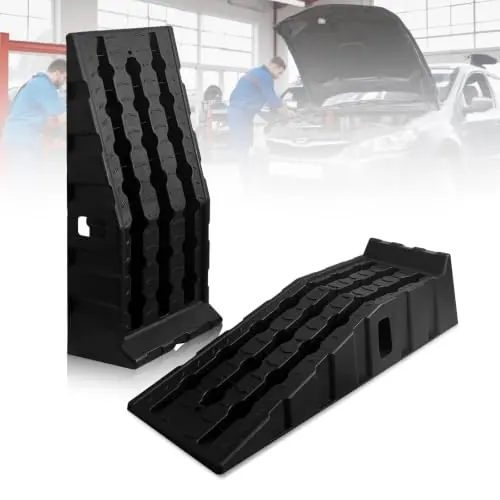
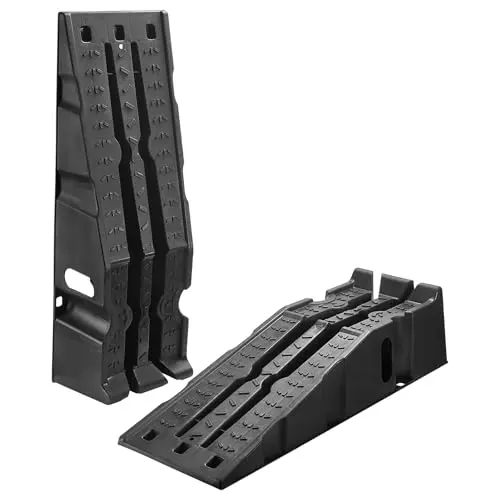
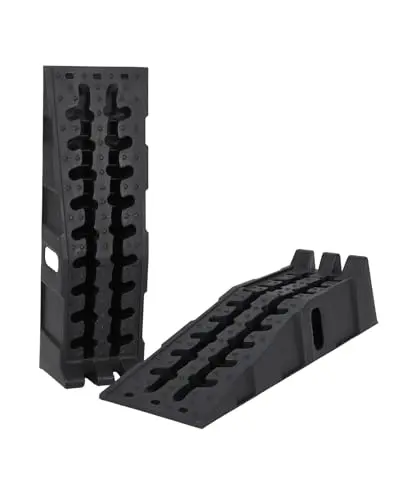
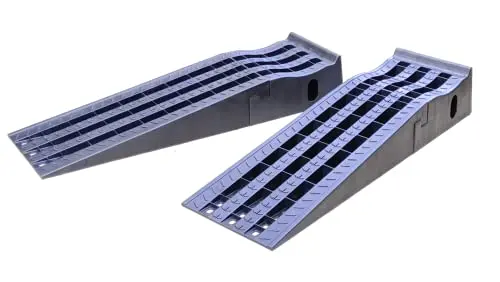
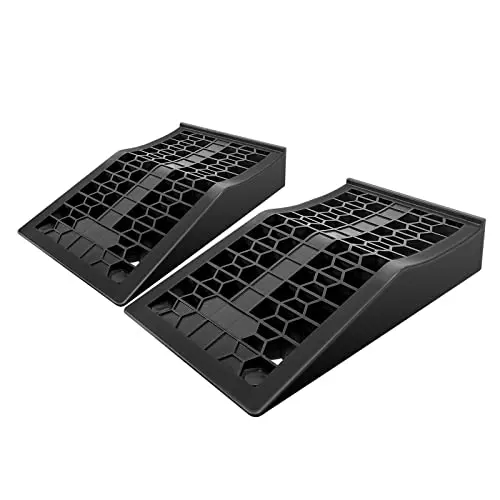
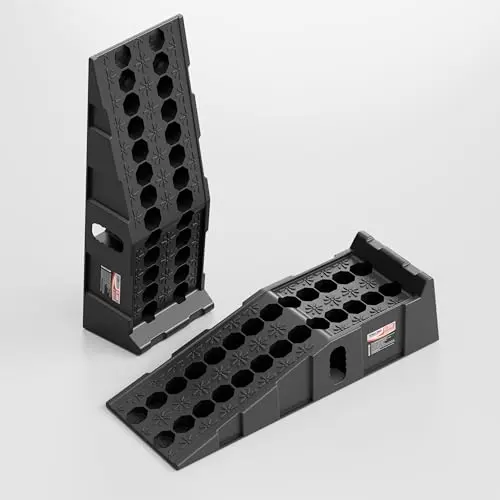
Molded polymer ramps can be relatively light, corrosion resistant, and easier to carry between a storage area and the vehicle bay. Compare reinforcement, base footprint, platform texture, tire stops, and the maker’s surface requirements. Stop using any ramp that develops cracks, distortion, or damaged traction surfaces.
Steel Car Ramps
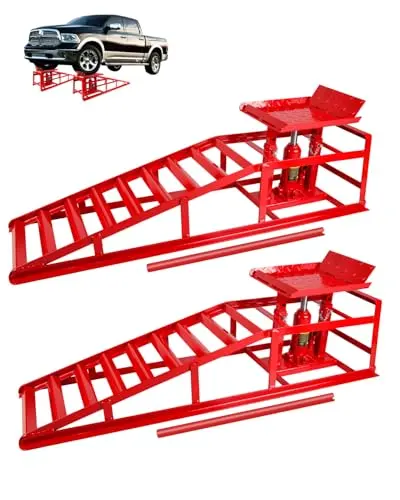
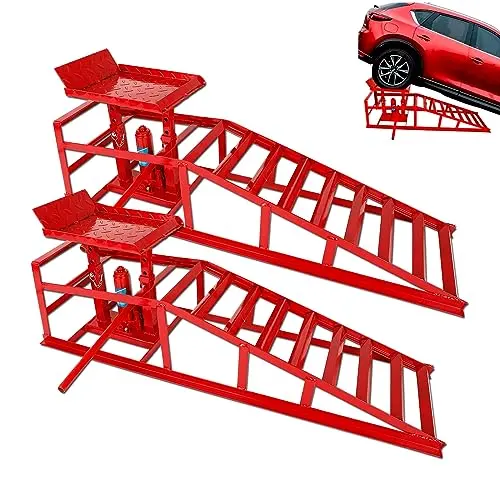
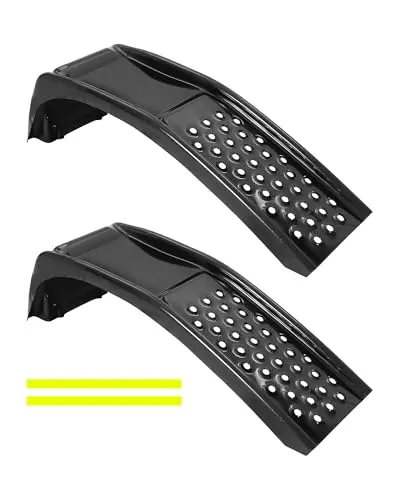
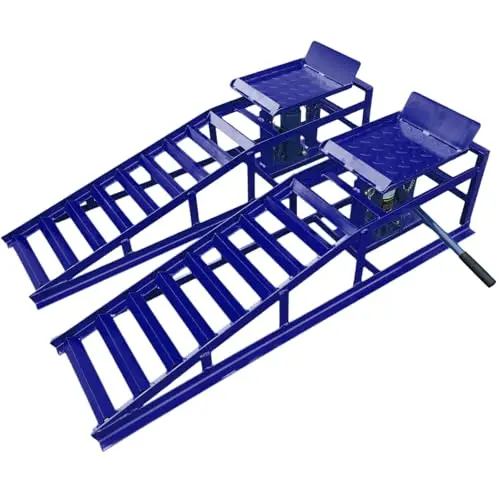
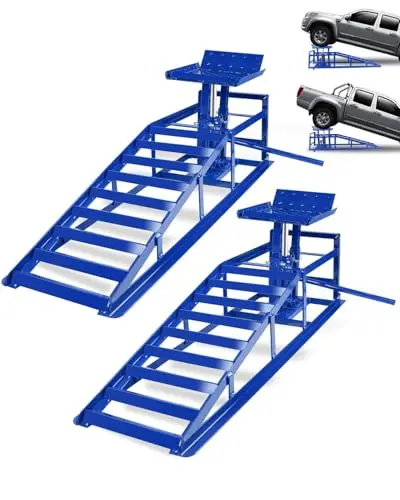
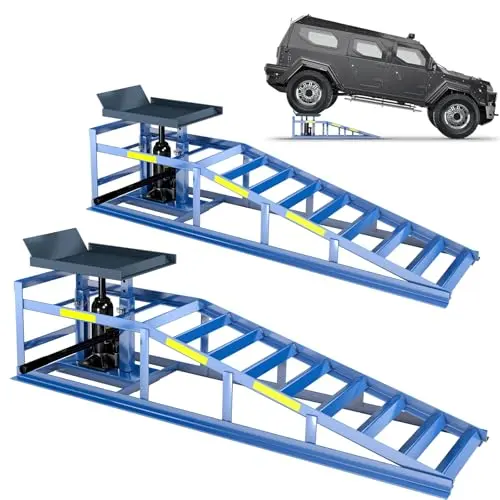
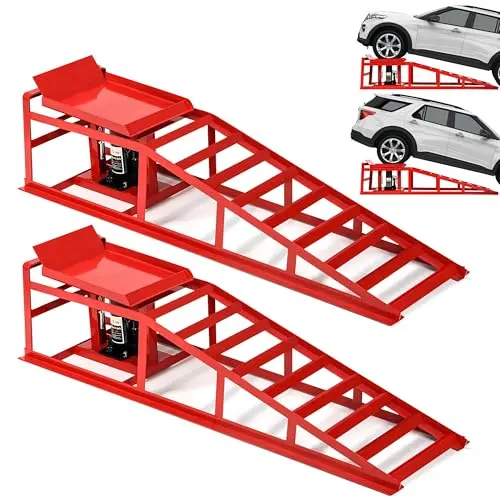
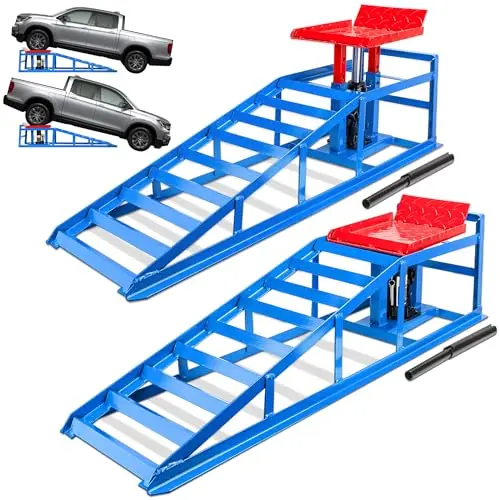
Steel ramps appeal to shoppers who prefer a traditional welded or formed design. Compare weld quality, bracing, corrosion protection, platform width, feet, and how the ramp sits on the garage floor. Inspect for bending, cracked welds, loose hardware, or severe corrosion before use.
Hydraulic and Adjustable Service Ramps
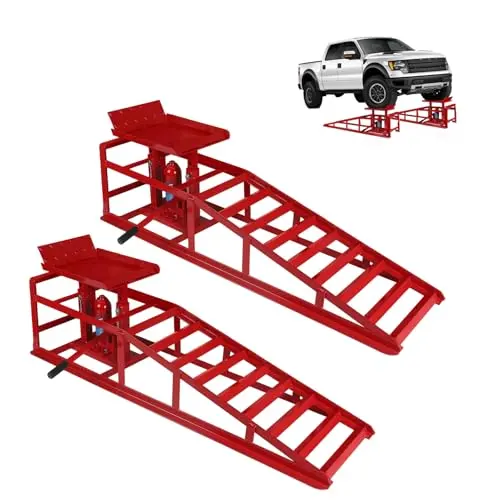
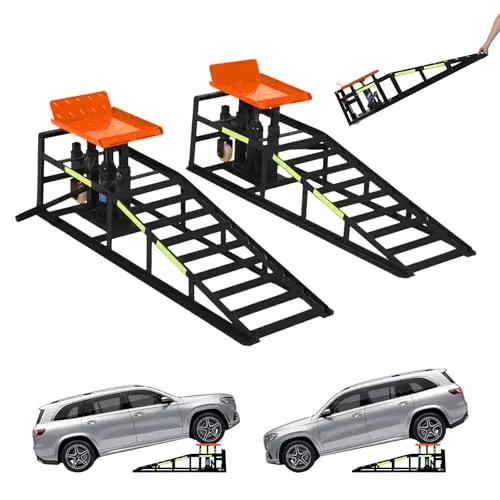
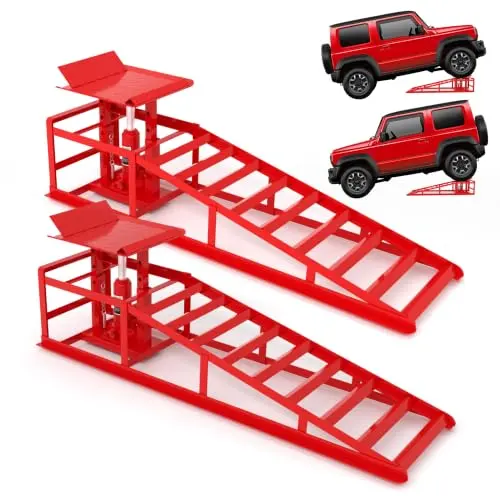
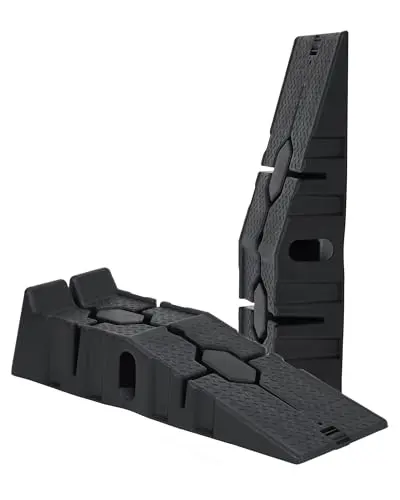
Some service ramps combine a drive-on platform with an adjustable lifting mechanism. These designs introduce additional moving parts and locking procedures, so the complete operating sequence matters as much as the headline lift range. Use only the positions, locks, and support procedures the manufacturer specifies.
Capacity, Tire Width, and Approach Angle
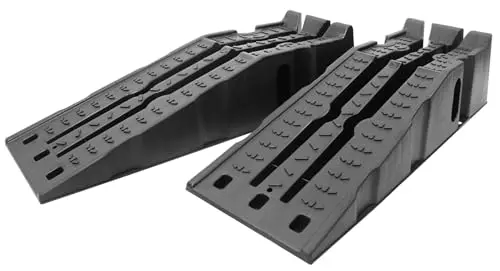
Three measurements eliminate many poor matches. First, verify the required capacity using the method specified by the ramp maker. Second, make sure the usable deck safely accommodates the vehicle’s actual tire width—not merely the ramp’s outside width. Third, compare the approach angle and ramp length with the vehicle’s ground clearance and front overhang.
Wider vehicles, trucks, and SUVs may also need a broad base and enough spacing flexibility to center both tires accurately. Low-clearance sports cars usually prioritize gradual entry. A tall lift can create more working space, but it also changes the approach and storage footprint. Choose the combination that supports the intended task without exceeding any listed limit.
Which Garage Jobs Suit Vehicle Ramps?
Car ramps are commonly considered for oil changes, fluid inspections, exhaust viewing, underbody cleaning, splash-shield access, and other jobs where the wheels can remain on the vehicle. They are not a direct substitute for every lifting method. Brake, suspension, wheel, and tire work may require the wheels to be unloaded or removed, so use equipment and procedures approved for that specific job.
The comparison guide Car Ramps vs Jack Stands explains why the task determines the correct support method. Never combine lifting or support equipment in an improvised way merely to gain additional height.
Create a Clear Vehicle-Service Area
Use ramps on the firm, level, clean surface required by their instructions. Remove loose tools, hoses, cords, stones, oil, and debris from the approach path. Align the tires with the center of each platform, keep bystanders outside the vehicle path, and use a spotter when the manufacturer recommends one. Good garage lighting makes alignment, tire position, leaks, and surface damage easier to see.
Organized garage tool storage and a secure tool box keep service tools out of the driving lane. Protective garage floor mats may help manage drips and debris when their surface is compatible with the ramp maker’s requirements. Browse the Garage Equipment & Car Care hub for related workshop and vehicle-care categories.
Car Ramp Guides by Vehicle and Job
- Car Ramp Selection and Safety Guide — a complete fit, capacity, approach-angle, inspection, and setup process.
- Best Car Ramps for Oil Changes and Home Maintenance
- Low-Profile Car Ramps for Sports Cars and Low-Clearance Vehicles
- Car Ramps vs Jack Stands
- How to Choose Car Ramp Weight Capacity and Width
- Best Heavy-Duty Car Ramps for Trucks, SUVs, and Pickups
Car Ramps FAQs
How do I know whether a car ramp is wide enough?
Compare the vehicle’s actual tire section width with the manufacturer’s stated usable platform width and approved tire range. Do not use the outside width of the ramp as a substitute for usable deck width.
Are car ramps suitable for low-clearance vehicles?
Some are designed with a gradual approach, but compatibility depends on ramp length, approach angle, lift height, ground clearance, and front overhang. Measure the specific vehicle and follow the ramp manufacturer’s fit guidance.
Can ramps be used for every maintenance job?
No. They are best suited to tasks where the tires can remain supported. Jobs requiring wheel removal or unloaded suspension need a different approved lifting and support procedure.
Should I choose plastic or steel car ramps?
Choose by verified capacity, vehicle fit, construction, traction, storage, inspection needs, and the manufacturer’s approved use—not material alone. Both materials can be appropriate when the complete design matches the job.
What should I inspect before each use?
Follow the product manual. Common checks include cracks, bending, damaged welds, loose parts, corrosion, contamination, worn traction surfaces, and whether each ramp sits flat on the approved surface.
Compare car ramps for your vehicle and garage maintenance needs.
Shop Car Ramps on AmazonReturn to the Garage Products catalog to compare more storage, workshop, organization, and maintenance equipment.