Air Compressors vs Car Battery Chargers: A Professional Comparison
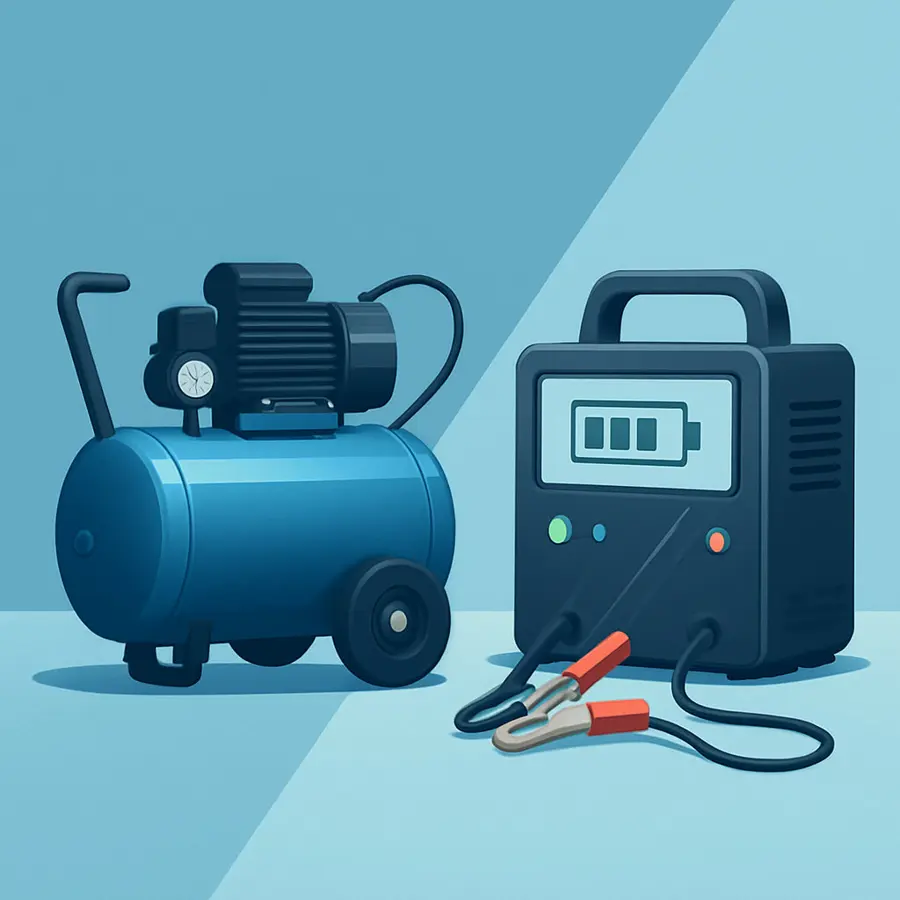
Air Compressors vs. Car Battery Chargers: A Comprehensive Comparison for Automotive Care
For any automotive enthusiast, professional mechanic, or everyday driver, "Air Compressors" and "Car Battery Chargers" are two essential tools to consider for your garage or toolkit. Both contribute significantly to vehicle maintenance and safety, but their functionalities, benefits, and usage scenarios differ considerably. Understanding these differences can help you make informed decisions about which device to invest in—or whether you might require both. In this expert guide, we compare air compressors and car battery chargers across key factors: their primary functions, applications, operational aspects, safety features, maintenance needs, pricing, and more. Whether you're managing a busy workshop or prepping for a long road trip, this comprehensive comparison will provide all the insight you need.
Understanding Air Compressors
What Are Air Compressors?
An air compressor is a mechanical device that converts power (using an electric motor, diesel or gasoline engine, or other sources) into potential energy stored in compressed air. By drawing air in and tightly compressing it within a tank, these devices provide a powerful, versatile source of energy for a variety of tasks.
Common Uses of Air Compressors in Automotive Contexts
- Inflating Tires: The most frequent use of air compressors for car owners is refilling and maintaining proper tire pressure.
- Operating Pneumatic Tools: Many auto repair shops rely on air compressors to power impact wrenches, ratchets, grinders, and spray guns.
- Cleaning: Compressed air blasts are ideal for cleaning dust and debris from difficult-to-reach areas in the engine or undercarriage.
- Painting: Air compressors are crucial for paint sprayers, ensuring a smooth and even paint application on vehicles.
Types of Air Compressors
- Portable Air Compressors: Compact units suited for on-the-go tire inflation or emergency roadside repairs.
- Stationary Air Compressors: Larger, more powerful setups for professional workshops and garages, capable of sustained, heavy-duty operation.
- Oil-Free vs. Oiled Compressors: Oil-free models are low-maintenance and ideal for clean environments, while oiled compressors offer durability for intensive industrial use.
Advantages of Air Compressors
- Versatility: One device to power multiple tools and tasks.
- Efficiency: Faster tire inflation and tool operation compared to manual pumps or electric tools.
- Long-Term Value: With proper maintenance, quality compressors offer years of reliable service.
Understanding Car Battery Chargers
What Are Car Battery Chargers?
Car battery chargers are electronic devices designed to restore and maintain the charge of a vehicle's battery. By converting AC power from a wall outlet into DC power suitable for batteries, these devices play a crucial role in ensuring your vehicle starts reliably and performs at its best.
Major Roles of Car Battery Chargers in Automotive Maintenance
- Jump Starting: Revive a dead or depleted battery to start the engine in emergency situations.
- Charging: Safely restore a battery's energy to optimal levels after periods of inactivity or deep discharge.
- Battery Conditioning: Many modern chargers offer "trickle charge" or "maintenance mode," preserving battery health when not in regular use.
- Desulfation: Some advanced chargers can help break down lead sulfate crystals on battery plates, extending battery lifespan.
Types of Car Battery Chargers
- Manual Chargers: Require operator attention to avoid overcharging; best for knowledgeable users.
- Automatic (Smart) Chargers: Use sensors and microprocessors to stop charging when the battery is full, enhancing safety and battery longevity.
- Portable Jump Starters: Compact, high-output chargers with built-in batteries for emergency use on the roadside.
- Multi-Voltage Chargers: Support a range of batteries (12V, 24V, etc.) for cars, trucks, or other vehicles.
Advantages of Car Battery Chargers
- Vehicle Reliability: Maintain optimal battery charge for consistent, dependable starts.
- Battery Longevity: Avoid deep discharges and overcharging, conditions that damage batteries.
- Cost Savings: Reduce the need for battery replacements by practicing regular battery care.
Detailed Comparison: Air Compressors vs. Car Battery Chargers
1. Primary Function and Usage
Air Compressors are designed to provide highly pressurized air for a wide array of tools and tasks. If you need to inflate tires, clean parts, or power pneumatic equipment, an air compressor is indispensable. Conversely, Car Battery Chargers serve a singular (but vital) function: restoring and maintaining battery charge for reliable vehicle operation. For drivers who face regular battery issues or operate vehicles in extreme climates, a battery charger becomes critical.
2. Application Scenarios
- Emergency Preparedness: Flat tires and dead batteries are two of the most common roadside emergencies. Air compressors empower drivers to address under-inflated tires on-the-go, whereas car battery chargers (especially portable jump starters) can revive a dead battery without external assistance.
- Workshop Efficiency: In professional environments, air compressors increase productivity by supporting multiple air-powered tools. Battery chargers, while less frequently in use, are indispensable for maintenance cycles on vehicles with infrequent use.
- Home Garage Value: For DIY enthusiasts, having both tools extends capabilities—from weekend tire-pressure checks to avoiding inconvenient battery failures.
3. Technical Specifications
| Feature | Air Compressors | Car Battery Chargers |
|---|---|---|
| Power Source | AC outlet, battery, gas/diesel engine | AC outlet (some have solar/USB options) |
| Portability | Ranges from handheld to stationary | Compact, highly portable options available |
| Output | Measured in PSI (pounds per square inch) and CFM (cubic feet per minute) | Measured in Amps and Volts (often 6V or 12V; some offer 24V or more) |
| Multi-Function Use | Yes (multiple air tools, inflation tasks) | Typically single function (charging/starting batteries) |
| Compatibility | Most tasks require specific air tool adapters for compatibility | Must match battery type (lead acid, AGM, etc.) and voltage |
4. Ease of Use
Air Compressors: Operating an air compressor for basic tasks (such as tire inflation) is straightforward, though professional-level applications (like spray painting or using impact wrenches) require a basic understanding of pressure settings and safety protocols.
Car Battery Chargers: Modern "smart" chargers are extremely user-friendly. Just connect the clamps, select the correct charging mode, and let the microprocessor manage the rest. Manual chargers require more expertise to avoid overcharging or damaging the battery.
5. Maintenance Requirements
- Air Compressors: Regularly check oil (for lubricated models), change filters, empty condensation from tanks, and inspect hoses for wear.
- Car Battery Chargers: Generally low-maintenance; ensure cables and clamps are clean and undamaged. Smart chargers benefit from software updates for optimal performance, if applicable.
6. Safety Features
-
Air Compressors:
- Automatic shut-off when maximum pressure is reached
- Thermal overload protection
- Pressure relief valves
- Clear, easy-to-read pressure gauges
-
Car Battery Chargers:
- Reverse polarity protection (to prevent harm to vehicle electronics)
- Spark-proof connections
- Overcharge protection (especially in smart chargers)
- Short circuit and thermal protection
7. Price and Value
Air Compressors range from extremely affordable portable models for emergency tire inflation ($30–$100) up to advanced, industrial-duty systems ($400+). Versatility often means more value per dollar for multi-tool operations.
Car Battery Chargers start under $30 for basic manual models. Smart, multi-voltage, or jump starter-integrated chargers can cost $70–$200, depending upon power, features, and brand reputation. The value is highest for owners of multiple vehicles or those living in cold climates where batteries frequently fail.
8. Longevity and Durability
Both air compressors and car battery chargers are designed for long-term use. Quality construction, reputable brands, and correct usage ensure years of service. Always survey warranty terms and availability of replacement parts, especially for workshop or commercial settings.
9. Key Pros and Cons
| Tool | Pros | Cons |
|---|---|---|
| Air Compressors |
|
|
| Car Battery Chargers |
|
|
Choosing the Right Tool: Decision Factors
Consider Your Primary Needs
- If you frequently encounter flat tires or perform regular tire-pressure maintenance, an air compressor brings speed and convenience. It's invaluable for those using air-powered tools in automotive repair or bodywork.
- If battery drain is your biggest headache—perhaps due to infrequent vehicle use, harsh climates, or shorter commutes—a car battery charger is a practical investment to ensure reliable starts every time.
- For the ultimate in preparedness: Many motorists invest in compact models of both tools, ensuring full-spectrum coverage for both common roadside emergencies and preventive maintenance.
Assess Portability and Space
- Air compressors can be heavy and require storage space, although many portable options now fit in a trunk or toolbox for emergency use.
- Car battery chargers are generally smaller and easy to store, with some models barely bigger than your hand.
Evaluate the Learning Curve
Most battery chargers, especially smart types, are essentially plug-and-play. By contrast, air compressors may need basic understanding of pressure ratings, safe usage, and proper maintenance—particularly when used with various pneumatic tools.
Budget Considerations
Compare your available budget against the level of utility each tool offers for your situation. While inexpensive options exist in both categories, investing in a reputable brand pays off in safety and long-term reliability.
Innovations and New Features to Watch
For Air Compressors
- Digital Pressure Gauges: For more accurate inflation and pressure settings.
- Auto Shut-Off Systems: To prevent over-inflation, especially in portable tire inflators.
- Quieter Operation Technology: New compressor models focus on reducing sound levels for home and office use.
- Integrated Power Banks: Some compact units now offer USB charging ports for devices, increasing versatility.
For Car Battery Chargers
- Multi-Stage Charging: Modern devices intelligently cycle through distinct charging modes: bulk, absorption, and float, protecting battery health.
- Reverse Polarity and Safety Alerts: Advanced models signal or prevent unsafe connections.
- Lithium Battery Compatibility: New chargers are supporting both conventional lead-acid and advanced lithium-iron-phosphate (LiFePO4) batteries.
- Integrated Diagnostic Tools: Some chargers troubleshoot battery health, providing long-term maintenance guidance.
Frequently Asked Questions (FAQs)
1. Can an air compressor charge a car battery?
No. Air compressors operate by supplying pressurized air and have no capacity to transfer electrical power for charging batteries. Only specific devices such as car battery chargers are designed for charging automotive batteries safely.
2. Are there devices that combine both functions?
Yes, a small but growing market exists for multi-function emergency vehicle devices that combine tire inflation (using integrated air compressors) and jump starting (using a built-in battery and charger). While convenient for emergencies, these units typically offer limited performance in both areas compared to dedicated standalone devices.
3. How often should I use each tool?
Air Compressors: Use whenever tire pressures are low, before road trips, and whenever operating pneumatic tools.
Car Battery Chargers: Use whenever the battery is discharged, after jump-starts, or proactively during periods of non-use, especially in cold weather.
Expert Recommendations for Every Scenario
- Daily Drivers: Consider a portable air compressor for weekly tire checks and a smart car battery charger for peace of mind, especially in climates with severe temperature swings.
- Emergency Preparedness: Invest in a combo unit for roadside kits—but supplement with dedicated devices if regularly working on vehicles.
- Professional Workshops: Choose an industrial-grade stationary air compressor and a fleet-ready multi-voltage smart charger for maximum capability.
- DIY Enthusiasts: Start with compact, reliable units in each category—expanding as your at-home projects grow in scope.
Conclusion: Air Compressors or Car Battery Chargers—Which is Best for You?
In the ongoing debate between Air Compressors and Car Battery Chargers, the winner depends entirely on your automotive needs. Air compressors shine with their versatility and ability to power multiple tools, making them foundational in garages and workshops. Car battery chargers, meanwhile, deliver targeted reliability for your vehicle’s electrical system, turning inconvenient breakdowns into easily solved hiccups.
Ultimately, the savvy car owner or workshop manager will recognize that these tools complement each other more than they compete. Equipping your garage or vehicle with both ensures you're prepared for whatever the road may bring—be it a flat tire or a dead battery. As you consider your next purchase, assess your primary use-cases, available space, budget, and the features most relevant to your vehicle or business.
Ready to upgrade your automotive maintenance arsenal? Browse our latest selections of air compressors and car battery chargers to discover the perfect tools that support safety, convenience, and peak performance. Investing in the right equipment doesn’t just save you money in the long run—it offers confidence, safety, and readiness for every journey.
Explore our full product range today or contact our expert team for personalized recommendations!